Success Story: Nittany Paper Invests in Training Ahead of New Equipment Investment

This image is to identify the company being reference in the story.Marcal Paper aka Nittany Paper Mills, LLC, is owned by Atlas Holdings, LLC.  Atlas was founded in 2002 and is headquartered in Greenwich, Connecticut. Atlas and its affiliates own 16 companies employing nearly 20,000 associates. With more than 100 facilities across the globe, Atlas generates an estimated $4 billion in annual revenue. Nittany Paper Mills in Lewistown, PA manufactures and provides recycled tissue and towels for use in homes, schools, restaurants, hotels and hospitals.

Nittany Paper Mills is investing in new equipment and technologies to become even more competitive. These include new production lines, new packing lines, robotics and more. Such new technologies are disruptive as they change how work is done. In an effort to ensure the successful implementation of these investments, Marcal sought training for its managers to prepare them to manage change. Specifically, training to help managers understand the psychology of change and how to accelerate change. In other words, they wanted to help their managers to further develop their skills to be more effective at leading change. Without these skills, investments on this level may not have the desired impacts.

After the training, with these skills now developed in their managers, Nittany Paper Mills was confident that the implementation of the new equipment and technologies would be successful, driving confidence to make the investment of more than $500 million.

“We make investments where and when our workforce is skilled and ready.  The training was a solid foundation for supervisor development”

Steve Prentiss, Vice President of Human Resources, Marcal Paper


Success Story: IMC Helps Metal Integrity Implement Advanced Robotics & Automation Technology

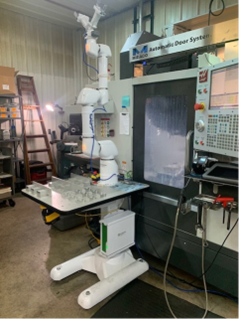
Metal Integrity, a sheet metal fabricator and machine shop in State College PA, was having continued workforce issues, leading to challenges to meet customer orders. Through a national Advanced Manufacturing Technology Solutions grant, IMC helped the company implement advanced robotics & automation technology. They quickly realized production improvements with the first job run on the automated system of 200-250%, seeing an increase in production from 180 parts per week to 475 parts per week.

After attending an AMTS sales training program in Fall 2022, knowing of Metal Integrity’s interest in automation, IMC’s Dana Gordon reached out to Metal Integrity directly to discuss.  The sheet metal fabricator and machine shop was having continued workforce issues, leading to challenges to meet customer orders.

Support provided; tools utilized

Upon meeting with Metal Integrity, IMC helped them refine their automation strategy, which consisted not only of robotic machine tending, but also an investment in a new lathe with a bar feeder along with sheet metal quoting automation software. As the client was already progressing down the path toward machine tending, there was no need to complete a full assessment; IMC and the AMTS lead for Pennsylvania instead met with client to validate their robotic machine tending approach.

Lessons Learned

Overall, the project was a success, however the timeline was longer than anticipated. The project hit various challenges during the implementation phase, leading to a longer than desired learning curve.  These challenges were primarily related to the inexperience of both the integrator and the robot manufacturer.

The first challenge dealt with the performance of the Productive Robotics OB7 robot once a dual gripper was added.  The robot motion became very erratic and was unable to perform the programmed tasks.  It was later discovered that the robot programming interface was inadequate for making the needed adjustments for the higher weight of the end effector and the extended tool center point (TCP).  It took weeks of troubleshooting by both the integrator, Exact Machine Tool, and the manufacturer, Productive Robotics to make this discovery, further delaying production implementation.

The next major challenge involved the workholding setup.  As is common in mill machine tending systems, Exact Machine Tool installed a Airvise AV-T-4 pneumatic vice that was integrated into the robot controller.  However, the pneumatic vice was unable to hold the tight tolerances required of the target part. In the end, Metal Integrity found a solution that allowed them to automate their standard Kurt workholding system that already held needed tolerances with a Rapid Design Solutions CNC vise actuator.

An ROI of 4 months was expected prior to launching the project and that will be exceeded, depending on upcoming parts volumes.  Metal Integrity has already realized production improvements on the first job run on the automated system of 200-250%, seeing an increase in production rate from 180 parts/week to 475 parts per week.  For this part, based on reallocated labor alone, they will see an ROI of 6 months.  When the increase in production for parts run off-shift with a conservative value applied to machine runtime is considered, it surpasses a 3-month ROI.

In hindsight, going with an experienced system integrator may have reduced the implementation difficulties experienced in working with an equipment distributor. However, the low price point of the system and the fact that they are now in operation, makes it challenging to determine if that would have been advantageous. Even considering the delays and additional time required of Metal Integrity personnel, the ROI is in an acceptable range.

This project made possible through MEP AMTS grant funds.


Success Story: IMC Assists Lycoming Engines in Realizing Significant Cost Savings with Lean

Lycoming Engines is the leader in the piston aviation market, producing more piston engines for general aviation manufacturers than any other company in the world.

Headquartered in Williamsport, Pennsylvania, Lycoming is a global operating division of Textron’s Avco Corporation subsidiary, and an operating unit of Textron Systems, specializing in the engineering, manufacturing, assembly, test and support of piston aircraft engines. The company employs 470 people.

SITUATION

Lycoming Engines realized that remaining competitive in a downturned economy requires ongoing innovation, enhanced efficiencies and involvement from all members of an organization to be alert and focused on continuous improvement and opportunity. Lycoming Engines began what would be the underpinnings of an aggressive initiative to have all levels of the organization undergo training in Lean manufacturing.

According to Gary Naculich, Manager, Transition to Production, Lean training was an integral part of the organization’s growth strategy.

“Identifying ways to remove waste from our processes is a significant component of keeping Lycoming Engines a thriving business. Our approach is always to have an eye on the future and to be prepared. Our hope was that LEAN would help us to cut back on waste, be more efficient and remain optimally productive,” said Naculich.

Naculich reached out to IMC-PA, a NIST MEP network affiliate, to assist in building a strategy to accommodate an aggressive schedule, variety of skill sets and potentially diverse feelings about the initiative.

As a result of IMC’s assistance, Lycoming Engines was recognized as the global premier award process for operational excellence, has twice gone 1 million hours without a lost time injury, and was recognized as one of Cessna’s ‘Top Suppliers’ by earning their STARS supplier award three consecutive times.

SOLUTION

IMC business advisors and Lycoming management developed a master plan to engage the entire organization in Lean. The first step was to send several employees to IMC Lean 101 training in order to better familiarize them with the principles and help them determine the merits of a full-scale training initiative for the company.

To achieve buy-in from Lycoming’s union workforce, management sent several union members to Lean 101 training to evaluate its worth for the company. Union members returned from the training enthusiastic about Lean and fully engaged.

IMC planned a variety of training scenarios, including employee participation in scheduled workshops as well as IMC training sessions conducted directly in Lycoming Engines facilities.

Lycoming Engines Manager of Proposals and Contracts, Mary Fourney, said, “A key factor in the success of the program was IMC’s ability to work with employees at all levels and build trust. Some of our folks had the perception that Lean meant losing their jobs. Their fears were alleviated, though, due in large part to how IMC engaged them in the process and the obvious positive benefits that Lean could potentially have for Lycoming Engines.”

RESULTS

  • Realized $50M in cost savings
  • Improved safety by 30%
  • Improved on-time delivery from 40% to 98%
  • Awarded Shingo Silver Medallion in Shingo Prize program


Success Story: Northway Industries, Inc., Implements Web-Based Solution with IMC’s Assistance

Northway Industries, Inc. is a privately held company employing 120 people that provides quality contract manufacturing services to a variety of clients.

The company was founded in 1966 and utilizes high-pressure laminates, melamine, vinyl, paper, and wood veneer products to produce cabinets, countertops, work surfaces, fixtures, and more. Operations consist of CNC controlled machining, milling, routing, and banding. Primary markets served include OEM suppliers, retailers, schools, and institutions.

SITUATION

Beginning in 2005, Northway partnered with IMC, a NIST MEP affiliate, to engage in lean and cellular manufacturing consultation and implementation. The company was re-engineered from a mass-production shop to a mass-customization shop, allowing Northway to be more responsive to its market which needed more small-batch custom orders.

As a result of the implementation, the company saw an increase in small batch orders and single piece flow orders.  This significantly boosted the volume of information necessary to initiate and complete work. It became apparent that Northway’s legacy systems were becoming less effective and less accurate with this changing business model.

While the changes implemented during the first IMC project allowed Northway to expand capabilities and machine and fabricate at faster rates, the delays caused by managing an increased volume of critical information were hampering true growth.  Northway continued to work with IMC to tackle the new problem and develop an information system that would allow project data to be managed more effectively.

The robust, scalable information system that was developed with IMCs assistance is capable of pulling together details about a wide range of business operations.

SOLUTION

The project began with an objective of creating a web-based project scheduling system.  The initiative soon grew to be a complete information system that linked all aspects of the project and client relationship into one centralized, online location.

The system includes a project-based scheduling system, contract documents, customer purchase orders, production documents, a materials database, RFID (radio-frequency identification) order tracking, company policy and procedure documents, quality control information, and sales-related communications. The new system allows both employees and customers to log in and see relevant project-specific data.

RESULTS

  • $2 million in increased sales
  • $100,000 in cost savings
  • $75,000 in new investment


Success Story: IMC Enables Railroad Company to Lay Tracks for Continued Success

ORX Railway Corp. is a manufacturer of rail wheel sets. The roots of ORX are buried deeply in the railroad industry, planted over a century ago by co-founder and president Glenn Brandimarte’s grandfather – an Italian immigrant who found employment quickly on the tracks and dedicated his life to his work.

The tracks for ORX’s success were set by nearly a century of experience, dedication, and innovation which still drives the company today.

SITUATION

ORX was required to carry out internal quality audits to verify compliance with the Association of American Railroads, Specification M-1003, and their own current quality assurance practices. IMC, a NIST MEP affiliate, was contacted to perform the audit. IMC contracted with a third-party consultant and former employee who performed previous audits in order to help with the latest one.

The company was able to use the audit process and results to develop an action plan to strengthen their processes and make the entire system more efficient and effective.

SOLUTION

IMC and its third party consultant conducted a two-day internal audit of ORX’s quality management system to verify compliance with stated requirements. The Quality Assurance System Evaluation Checklist provided by the Association of American Railroads (AAR) was used to conduct this audit. Afterwards, a written report was prepared with any non-conformances identified and the findings reviewed with the company.

ORX was able to identify and implement corrective action for nonconformances and successfully pass the AAR audit of their system. The IMC provided additional continuous improvement coaching as well.

RESULTS

  • $500,000 capital investment
  • $10 million in retained sales
  • $10,000 in cost savings


Success Story: Pik Rite Prepares for New Leadership Roles and Increased Production with IMC’s Guidance

Pik Rite Inc. designs and manufactures innovative, quality-built vegetable harvesting equipment, agricultural manure spreaders, commercial waste-handling equipment and hydroseeding units for a growing national and international market.

The company and its 50 employees are located in Lewisburg, Pennsylvania.

SITUATION

Pik Rite was in challenging, yet highly positive circumstances — production was in the process of doubling. That situation meant that the company needed to fill several production leadership roles quickly. General Manager Randy Beiler turned to the IMC, a NIST MEP affiliate, for their experience and expertise.

I often recommend IMC to other manufacturers as an innovative source in solving problems and eliminating bottlenecks. – Randy Beiler

SOLUTION

Training current employees for their new leadership roles became a top priority, along with executive coaching. IMC developed a project to work with management on strategic topics and train supervisors on the fundamentals of being an effective manufacturing floor leader. The training program for those in new supervisor roles was held over a 10-week period, consisting of weekly three-hour sessions.

Training covered a spectrum of leadership fundamentals, including topics such as : introduction to supervision; managing and measuring team performance; basic communication skills; teamwork for supervisors and group leaders.  The sessions were split between two separate groups of employees taking classes on different days of the week.

Beiler deems the initiative a complete success. “The project improved leadership capabilities of existing management, helped to build more leaders, and educated employees on the basics of economics and expanded their business sense.”

The project fulfilled the main objective of preparing employees for new leadership roles in order to manage increasing production requirements. According to Beiler, “We promoted from within, gave our employees an opportunity to grow, and doubled our production in a two year period.”

RESULTS

  • $2M in increased sales
  • 20 jobs created
  • Cost savings of $250,000
  • More than $700,000 in new capital and workforce investments