POLCA: The Production Control System for High-Mix, Low-Volume and Custom Products

CLASS IS FULL – REGISTRATION IS CLOSED

This half-day workshop will explain POLCA (Paired-cell Overlapping Loops of Cards with Authorization), an alternative to Kanban for material control on the shop floor. POLCA is a card-based visual control system that manages the flow of jobs through the shop floor: at each operation, it controls which job should be worked on next to meet delivery targets. POLCA ensures that upstream operations use their capacity effectively by working on jobs that are needed downstream, while at the same time preventing excessive work-in-process (WIP) build-ups when bottlenecks appear unexpectedly.

POLCA is particularly suited to companies manufacturing high-mix, low-volume and customized products, for which Kanban systems do not work well. Such companies struggle with long lead times, late deliveries and daily expediting to meet delivery dates. POLCA has delivered impressive results in such environments.

The crowning aspect of POLCA is that it is simple. It does not require any complex software implementation: it can be used without an ERP system or it can seamlessly complement an existing ERP system.

The workshop will begin with a tutorial on POLCA, followed by a computer simulation demonstration of POLCA. The class will include several case studies of industry applications, as well as an overview of Suri’s new book on POLCA (see below).

The workshop includes:

  • The Need for a New Material Control Strategy: Why MRP systems can result in an increasing spiral of long lead times and late deliveries and why concepts such as takt time and Kanban do not work well in low-volume or custom environments.
  • Detailed Explanation of POLCA: POLCA stands for Paired-cell Overlapping Loops of Cards with Authorization. This hybrid push/pull system combines the best features of card-based pull (Kanban) systems and push (MRP) systems while overcoming their drawbacks for low-volume and custom production.
  • Computer Simulation of POLCA: A computer simulation will be used to demonstrate how POLCA works for a company making low-volume and custom-engineered products.
  • Overview of new book on POLCA: Attendees will get a “walk-through” of Suri’s new book to provide them with an overview of the contents and tips on how to best use the book.
  • Industry Case Studies of POLCA Application: Several industry case studies will be presented to show the effectiveness of POLCA for companies in many different industries, including applications in USA, Canada and Europe.

In summary, through the theory and examples in this workshop, attendees will see the impact of POLCA on product lead times and on-time delivery and learn how POLCA can provide companies with a powerful competitive advantage.

** Bonus **

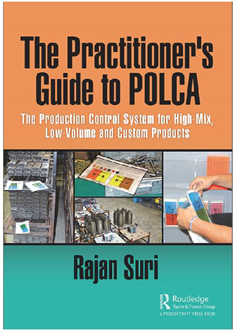
 Attendees will receive a copy of Suri’s newly published book: 

The Practitioner’s Guide to POLCA: The Production Control System for High-Mix, Low-Volume and Custom Products By Rajan Suri, Productivity Press, 2018.

Instructor:

Rajan Suri is Emeritus Professor of Industrial Engineering at the University of Wisconsin-Madison. He received his Bachelors degree from Cambridge University (England) and his M.S. and Ph.D. from Harvard University. Professor Suri is the Founding Director of the Center for Quick Response Manufacturing (QRM) at the University of Wisconsin-Madison, through which around 300 companies have worked with the University on developing and implementing QRM strategies. Click here to learn more about Professor Suri.

**Currently only accepting registrations for a minimum of three, maximum of five attendees per company.**  This training qualifies for WEDnetPA funding as Essential Skills Training.


Quick Response Manufacturing (QRM)

EVENT IS FULL – NO LONGER TAKING REGISTRATIONS

A Competitive Strategy for Low-Volume and Custom-Engineered Products

Quick Response Manufacturing (QRM) is a companywide strategy for lead time reduction throughout the enterprise. Using QRM, companies have reduced their lead times by 80-90%. As a result, these companies have not only seen large increases in market share, but also experienced 15-20% cost reduction and huge quality improvement. Although Lean Manufacturing techniques can be powerful in certain situations, for companies making low-volume or custom-engineered products, Lean techniques do not always apply well.

QRM can be a more effective, competitive strategy for companies targeting such markets. In addition, companies find that the lead time and cost reductions r4esulting from QRM enable them to compete effectively against low-cost countries.

This workshop will consist of two parts:

  • An Overview of QRM Principles & Strategy
  • Practical, Hands-on Manufacturing Critical-path Time (MCT)-Mapping Exercises

Overview of QRM Strategy

  1. The Power of Time: The non-obvious reasons why lead time is important (much more important than most managers realize), how it influences total operating cost and quality and how to take advantage of this realization.
  2. Organizational Structure: How to restructure your organization to minimize lead time throughout the enterprise.
  3. System Dynamics: How interactions between machines, people and products impact your lead times. As a result, capacity planning policies (e.g. machine and labor utilization) and lot sizing policies need to be rethought for QRM.
  4. Enterprise-wide Application: QRM is not just a shop floor approach; it is applied throughout the organization. This includes material planning and control, purchasing and supply chain management, office operations such as estimating and order processing and new product development. You will also see data on the “bottom line” impact of QRM on product cost, quality and lead times.

Using MCT-Mapping to Identify Lead Time Reduction Opportunities

In partnership with colleagues from major corporations, Suri has developed the concept of Manufacturing Critical-path Time (MCT), a precise metric, which highlights improvement opportunities by clearly quantifying system-wide waste. The metric can be used for both your internal operations as well as for your supply chain.

In this portion of the workshop, you will first learn the detailed definition of MCT and understand the business case for using MCT. You will learn how to calculate MCT correctly for various situations by working on numerical examples. You will learn how to use MCT-Mapping to communicate opportunities and convince management. You will also learn the differences between MCT-Mapping and Value Stream Mapping (VSM) and see why MCT-Mapping more clearly identifies opportunities for lead time reduction.

Both parts of this workshop will combine theory with practical examples using case studies of many companies that have implemented QRM in both USA and Europe.

** Bonus **

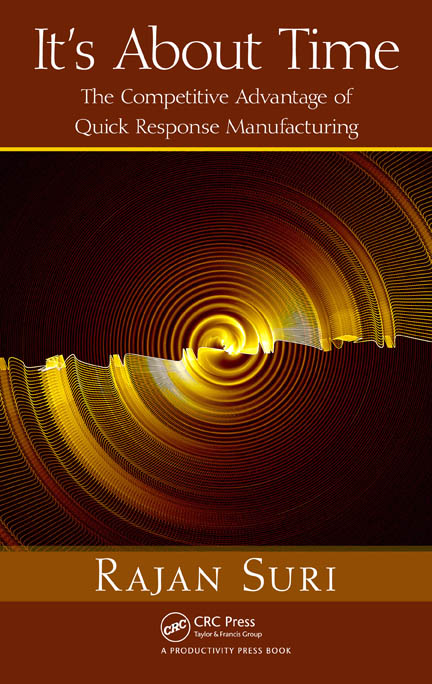
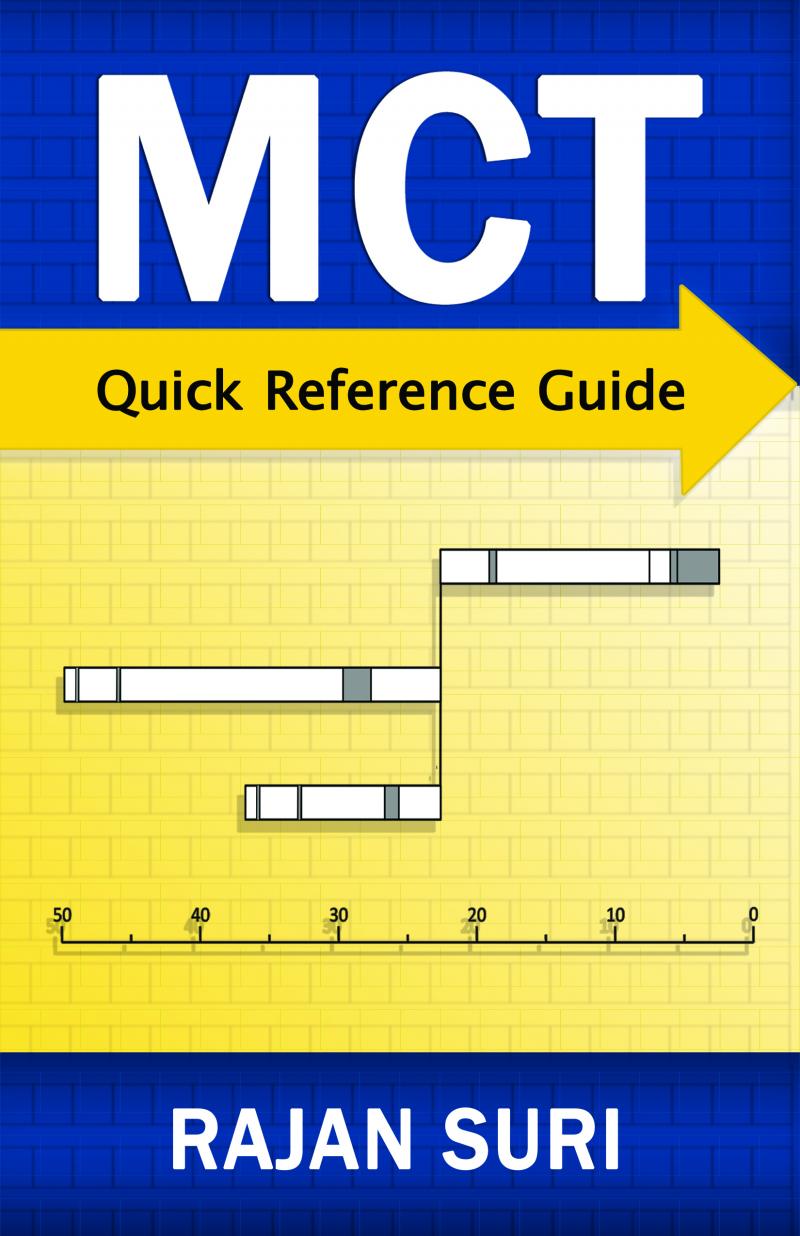
 Attendees will receive a copy of Suri’s books: 

It’s About Time: The Competitive Advantage of Quick Response Manufacturing and MCT Quick Reference Guide.

Instructor:

Rajan Suri is Emeritus Professor of Industrial Engineering at the University of Wisconsin-Madison. He received his Bachelors degree from Cambridge University (England) and his M.S. and Ph.D. from Harvard University. Professor Suri is the Founding Director of the Center for Quick Response Manufacturing (QRM) at the University of Wisconsin-Madison, through which around 300 companies have worked with the University on developing and implementing QRM strategies. Click here to learn more about Professor Suri.

**Currently only accepting registrations for a minimum of three, maximum of five attendees per company.** This training qualifies for WEDnetPA funding as Essential Skills Training.


Lean Behavior Based Safety

Training and behavior-based safety (BBS) programs haven’t changed much over the past few decades, but the world—and workforce—has. Manufacturers are now operating in a new reality, with a leaner and more diverse workforce that is expected to know and do more than ever before. If employees don’t know the right thing, or do the wrong thing, it can result in incidents that impact employee morale, turnover and your bottom line.

Organizations know they need an effective BBS strategy, but many struggle to implement programs which achieve desired results. Until now…

Join EHS, along with Terry Mathis (Founder & CEO of ProAct Safety) and Carol Leaman (CEO of Axonify) on Wednesday, December 12th from 2 – 3 pm EST as they discuss strategies for taking your BBS program to the next level, such as:

  • Building a proactive culture that promotes safety
  • Weaving short bursts of daily training into your frontline’s routine to make safe behavior a habit
  • Using microlearning to support each phase of BBS

Speakers

Terry L. Mathis, Founder and CEO, ProAct Safety

Terry is the founder and CEO of ProAct Safety®, an international safety and performance excellence firm. He is known for his dynamic presentations and writing in the fields of behavioral and cultural safety, leadership, and operational performance, and is a regular speaker at ASSE (Now ASSP), NSC, and numerous company and industry conferences. He has published over 150 articles in industry magazines and is the coauthor of five books including STEPS to Safety Culture Excellence (WILEY, 2013).

Terry is a veteran of over 1600 safety, culture and performance improvement projects in 39 countries and 21 languages, and has personally assisted organizations such as Georgia-Pacific, Herman Miller, AstraZeneca, Wrigley, ALCOA, Merck, Rockwell Automation, AMCOL International, Ingersoll-Rand and many others to achieve excellence.

Carol Leaman, CEO, Axonify

Carol Leaman (BA, MAcc, FCPA) is an award-winning thought leader with an impressive track record of successfully leading tech companies. Not only is she a disruptor in the corporate learning space, but she’s also the brains behind the Axonify Microlearning Platform. Prior to Axonify, Carol was the CEO of PostRank Inc., a social engagement analytics platform she sold to Google. She was also the CEO at several other technology firms, including RSS Solutions and Fakespace Systems. Carol is a celebrated entrepreneur and trailblazer (Sarah Kirke Award 2010, Waterloo Region Entrepreneur Hall of Fame Intrepid Award 2011 and the Profit500 Award for Canada’s Leading Female Entrepreneur 2017) whose articles appear in leading learning, business and technology publications. She also sits on the boards of many organizations and advises a variety of Canadian high-tech firms.

Sponsored by


Register

By clicking above, I acknowledge and agree to Informa’s Terms of Service and to Informa’s use of my contact information to communicate with me about offerings by Informa, its brands, affiliates and/or third-party partners, consistent with Informa’s Privacy Policy. In addition, I understand that my personal information will be shared with any sponsor(s) of the resource, so they can contact me directly about their products or services. Please refer to the privacy policies of such sponsor(s) for more details on how your information will be used by them.


Lean Champion Level Two Certification

This certification is a powerful second step for individuals looking to fortify and lead their organization’s Lean Journey.

Continuing the theme of a team-based approach to organizational opportunities, participants will further develop their skill sets to lead sustainable change within their organization. Our distinct “learn and do” approach is proven to develop Lean leaders that can manage, measure and lead their organization’s Lean transformation.

The four stages of the program: Establish the Direction, Deployment & Execution, Leadership Skills Development, Continuing the Journey – are designed to arm Change Agents with the ability to:

  • Establish the organization’s Continuous Improvement Direction
  • Develop the Leadership Skills necessary in the Lean Journey
  • Apply improvement across the Business Enterprise
  • Develop the necessary methods to Manage Daily Improvements

Learning activities of this program include:

  • One-on-one interaction and guidance from a Lean Master Instructor
  • A developed Continuous Improvement Strategy and Deployment Plan for a project
  • One-on-one strategy and Project Coaching session

Session 1 – Leadership in a Continuous Improvement Organization & Tying Financials to the Journey – September 11

Learn why leadership is so important when an organization deploys their CI journey and learn the leadership challenges in today’s workplace. This day discusses the key skills and required behaviors needed when deploying an important strategy. Participants will learn the different styles of leadership and their own leadership style. Participants will learn the importance of business financials and CI efforts.

 Session 2 – Strategy Development and Deployment & Key Performance Indicators – September 25

To engage an organization’s most important asset—their people—into their CI journey, an organization must provide direction. Participants will learn how to align departmental improvement initiatives that are aligned to the overall organizational goals and objectives. As the initiatives are developed, participants will learn how to establish key performance indicators that will help measure their improvement efforts.

Session 3 – Project Coaching Day – October 8

Each participant is required to lead a CI initiative within their organization. On this day, each participant shares their project with the group. Participants must demonstrate how their project is aligned to a challenge and how the project will be measured. Participants receive constructive feedback on their project.

Session 4 – Continuous Improvement Across the Enterprise and Mistake Proofing – October 23

CI efforts have dominated the production / manufacturing areas of many organizations. Great improvements have been made; however, deployment solely focused upon the production side of the business is not enough. CI must be deployed across the business enterprise. Participants will learn and see how these efforts are deployed in non-production areas, such as Human Resources, Sales, Engineering, etc. The Mistake Proofing Objectives include: Understanding importance of human errors in causing defects, relate mistake-proofing and inspection, understand appropriate uses and limitations of mistake proofing, incorporate basic mistake-proofing in production and office processes and developing ideas to decrease human error in the process.

Session 5 – Pull Kanban & TWI Job Method and Job Instruction – November 12

In this session, participants will understand why to use a Pull/Kanban System, the different types of Kanbans and how to and where to use a Kanban. Participants will also understand the purpose of job methods is to promote with supervisors the   Importance to continuously improve the way jobs are being done as well as the purpose of job instruction is to promote with supervisors how to quickly train employees to do a job correctly, safely and conscientiously.

 Session 6 – Emotional Intelligence & Failure Mode Evaluation Analysis (FMEA) – December 11

Emotional Intelligence (EI) has been identified as an important part of an individual’s ability to successfully cope with demands. Because of the constantly changing environments in which we live, individuals often require more than just task competencies or technical know-how to be successful. Participants will measure their level of EI and identify their strengths as well as opportunities for improvement. As Continuous Improvement Leaders, the ability to facilitate a group through decision making and other improvements requires special methods which allow the facilitator to provide leadership without taking control. Participants learn what facilitation is, decision making options, creating participation, managing group conflict and how to effectively manage meetings.

Session 7 – Lean Daily Management System – January 15

As CI leaders, the ability to facilitate a group through decision making and other improvements requires special methods, which allow the facilitator to provide leadership without taking control. Participants learn what facilitation is, decision making options, creating participation, managing group conflict and how to effectively manage meetings. The program concludes with participants learning the basics of building a daily management system that helps organizations create a culture of CI.

 Session 8 – Project Presentation & Graduation – January 29

IMC’s Lean Manufacturing Level One (or an equivalent approved by the instructor) is a required pre-requisite to the Champion program.

Taught by Lean Master Jeff Kopenitz

Lean Champion Flyer

A light breakfast and lunch will be provided.  This training qualifies for WEDnetPA funding as Essential Skills Training.

Register & Pay By Check


Lean Manufacturing Level One Practitioner Certification – Lycoming County

Lean Manufacturing

Lean Manufacturing Level One Practitioner Certification

(7 session, in-person program held in Lycoming County, PA)

This program starts in:

Become the Lean Leader Your Team Deserves

Ready to stop talking about Lean and start leading it?
The Lean Manufacturing Level 1 Practitioner Certificate is IMC’s powerhouse; hands-on training program built for doers—not just dreamers. Across seven high-impact sessions from February 18 through May 20, you’ll learn to eliminate waste, boost performance, and deliver real results where it matters most: on the floor.

This isn’t just training. It’s transformation—with a credential to prove it.

Seats are Limited – Secure Yours Now for Only $1,995!

Register

Why This Program Works

  • Real Tools, Real Results – Go beyond buzzwords with A3 Thinking, Value Stream Mapping, SMED, 5S, and more—then use them immediately back at your plant.
  • Coached to Succeed – Certified Lean experts work with you one-on-one to guide your improvement project and make sure it delivers measurable gains.
  • Respected Certification – Earn your Lean Manufacturing Practitioner Certificate and show leadership you’re ready to drive continuous improvement.
  • Collaborate & Compete – Learn alongside peers from across the region, swap ideas, and push each other to raise the bar.

Who Should Register

  • Front-line supervisors, team leaders, and shift coordinators
  • Quality, engineering, and continuous improvement professionals
  • Anyone serious about unlocking Lean results on the shop floor

Get Ready to

  • Lead change and guide teams through high-impact, high-energy projects that produce exceptional results—impressing managers and increasing your contribution value to the business.
  • Streamline your operations by identifying bottlenecks, eliminating waste, and transforming chaos into clarity—fast-tracking improvements leadership can see and measure.
  • Communicate like a Lean expert by confidently using data, visuals, and proven methods that get people aligned, engaged, and taking action.
  • Elevate your professional reputation by becoming the person who doesn’t just understand Lean—but delivers it, owns it, and drives it forward.

Click here for Lean Manufacturing Level One Practitioner Certification Flyer.

Register

Your Certification Journey

This seven-session program has the following topical sessions:

  • A3 Thinking & Team Communication – February 18
  • Value Stream Mapping & Gemba Walks – March 4
  • Root Cause Analysis & 5S – March 18
  • SMED (Quick Changeover) & Visual Controls – April 8
  • Onsite Gemba & Project Coaching – April 22
  • Standard Work, Project Updates & Capstone Simulation – May 6
  • Final Project Report-out & Celebration – May 20

Click here for session day details.

Where

All sessions will be held at the Penn College Earth Science Center just outside of Williamsport, in Montgomery, PA (Lycoming County) with the exception of April 22, which will be held at an IMC manufacturing client’s facility.

Instructor

Nico_de_Sousa_SerroNico de Sousa Serro, Lean/Continuous Improvement Expert

Nico is a Lean/Continuous Improvement content expert at an IMC sister-center where he is responsible for facilitating organizational continuous improvement efforts, implementation of Lean methodologies, and creating Lean/CI content. This involves developing onsite collaborative solutions and training, as well as conducting training and education courses. Nico has extensive experience in process improvement and Lean philosophy implementation, having driven many initiatives on manufacturing plant floor settings. Nico served as the Continuous Improvement Manager at Chelten House Products and held various roles within quality, production, and warehousing at the Pepsi Bottling Group. Nico championed several Six Sigma and Total Productive Maintenance (TPM) initiatives, in addition to maintaining ISO 22000 plant quality standards. Nico holds a bachelor’s degree in business with dual concentrations in Operations and Supply Chain Management and Economics from Drexel University’s LeBow College of Business. Nico also holds a Green Belt Six Sigma certification from Vilanova University.

WEDnetPA Logo

This training qualifies for WEDnetPA funding for qualified participants. Not familiar with WEDnetPA funding, contact IMC at info@imcpa.com or (800) 326-9467.


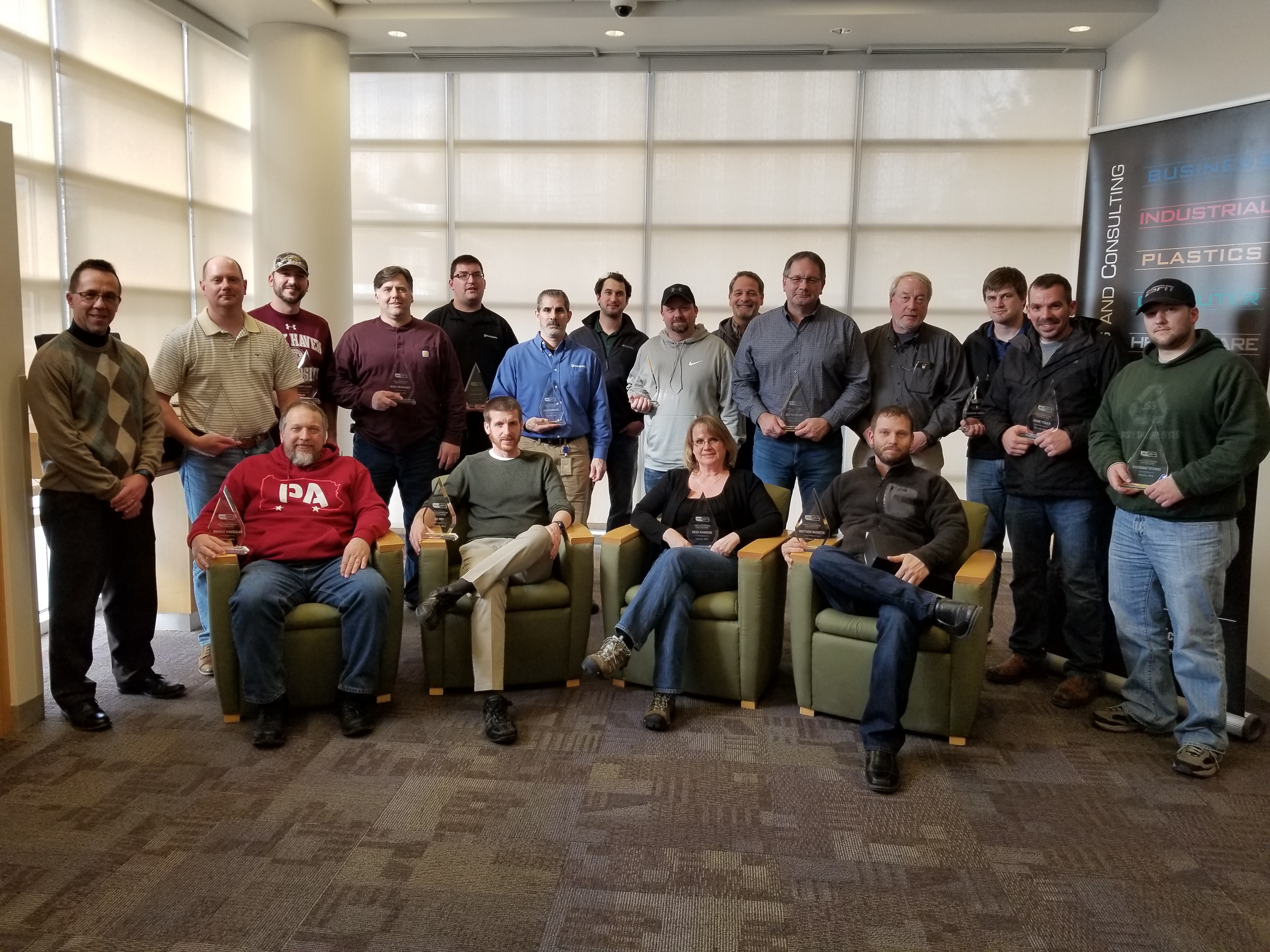
IMC Graduates 1st Lean Champions Level Two Class

IMC is pleased to recognize the following companies with graduates from our first Lean Champions Level Two class.

2018 Lean Champion Graduates

  • Advanced Powder Products, Inc.
  • Albemarle Corp.
  • Construction Specialties, Inc.
  • Custom Container Solutions
  • First Quality Tissue
  • Hermance Machine Co.
  • Jersey Shore Steel – Fabrication Division
  • Lewis Lumber Products, Inc.
  • Pik Rite, Inc.
  • Restek Corp.

Many of our Level One participants wanted to go further in their Lean journey so we developed the Lean Champions program.  Level Two is a powerful second step for individuals looking to fortify and lead their organization’s Lean efforts. Continuing the theme of a team-based approach to organizational opportunities, participants further develop their skill sets to lead sustainable change within their organization. The distinct “learn and do” approach is proven to develop Lean leaders that can manage, measure and lead their organization’s Lean transformation.

Click here to learn more about Lean Champions Level Two.


Lean Manufacturing Level One Practitioner Certification – Centre County

Lean Manufacturing

Lean Manufacturing Level One Practitioner Certification

(7 session, in-person program held in Centre County, PA)

This program starts in:

Become the Lean Leader Your Team Deserves

Ready to stop talking about Lean and start leading it? The Lean Manufacturing Level 1 Practitioner Certificate is IMC’s powerhouse, hands-on training program built for doers—not just dreamers. Across seven high-impact sessions from February 17 through May 19, you’ll learn to eliminate waste, boost performance, and deliver real results where it matters most: on the floor.

This isn’t just training. It’s transformation—with a credential to prove it.

Seats are Limited – Secure Yours Now for Only $1,995!

Register

Why This Program Works

  • Real Tools, Real Results – Go beyond buzzwords with A3 Thinking, Value Stream Mapping, SMED, 5S, and more—then use them immediately back at your plant.
  • Coached to Succeed – Certified Lean experts work with you one-on-one to guide your improvement project and make sure it delivers measurable gains.
  • Respected Certification – Earn your Lean Manufacturing Practitioner Certificate and show leadership you’re ready to drive continuous improvement.
  • Collaborate & Compete – Learn alongside peers from across the region, swap ideas, and push each other to raise the bar.

Who Should Register

  • Front-line supervisors, team leaders, and shift coordinators
  • Quality, engineering, and continuous improvement professionals
  • Anyone serious about unlocking Lean results on the shop floor

Get Ready to

  • Lead change and guide teams through high-impact, high-energy projects that produce exceptional results—impressing managers and increasing your contribution value to the business.
  • Streamline your operations by identifying bottlenecks, eliminating waste, and transforming chaos into clarity—fast-tracking improvements leadership can see and measure.
  • Communicate like a Lean expert by confidently using data, visuals, and proven methods that get people aligned, engaged, and taking action.
  • Elevate your professional reputation by becoming the person who doesn’t just understand Lean—but delivers it, owns it, and drives it forward.

Click here for Lean Manufacturing Level One Practitioner Certification Flyer.

Register

Your Certification Journey

This seven-session program has the following topical sessions:

  • A3 Thinking & Team Communication – February 17
  • Value Stream Mapping & Gemba Walks – March 3
  • Root Cause Analysis & 5S – March 17
  • SMED (Quick Changeover) & Visual Controls – April 7
  • Onsite Gemba & Project Coaching – April 21
  • Standard Work, Project Updates & Capstone Simulation – May 5
  • Final Project Report-out & Celebration – May 19

Click here for session day details.

Where

All sessions will be held at the Technology Center in University Park, PA (Centre County) with the exception of April 21, which will be held at an IMC manufacturing client’s facility.

Instructor

Nico_de_Sousa_SerroNico de Sousa Serro, Lean/Continuous Improvement Expert

Nico is a Lean/Continuous Improvement content expert at an IMC sister-center where he is responsible for facilitating organizational continuous improvement efforts, implementation of Lean methodologies, and creating Lean/CI content. This involves developing onsite collaborative solutions and training, as well as conducting training and education courses. Nico has extensive experience in process improvement and Lean philosophy implementation, having driven many initiatives on manufacturing plant floor settings. Nico served as the Continuous Improvement Manager at Chelten House Products and held various roles within quality, production, and warehousing at the Pepsi Bottling Group. Nico championed several Six Sigma and Total Productive Maintenance (TPM) initiatives, in addition to maintaining ISO 22000 plant quality standards. Nico holds a bachelor’s degree in business with dual concentrations in Operations and Supply Chain Management and Economics from Drexel University’s LeBow College of Business. Nico also holds a Green Belt Six Sigma certification from Vilanova University.

WEDnetPA Logo

This training qualifies for WEDnetPA funding for qualified participants. Not familiar with WEDnetPA funding, contact IMC at info@imcpa.com or (800) 326-9467.