IMC Proud to Support WVIA’s Lycoming Careers that Work Initiative

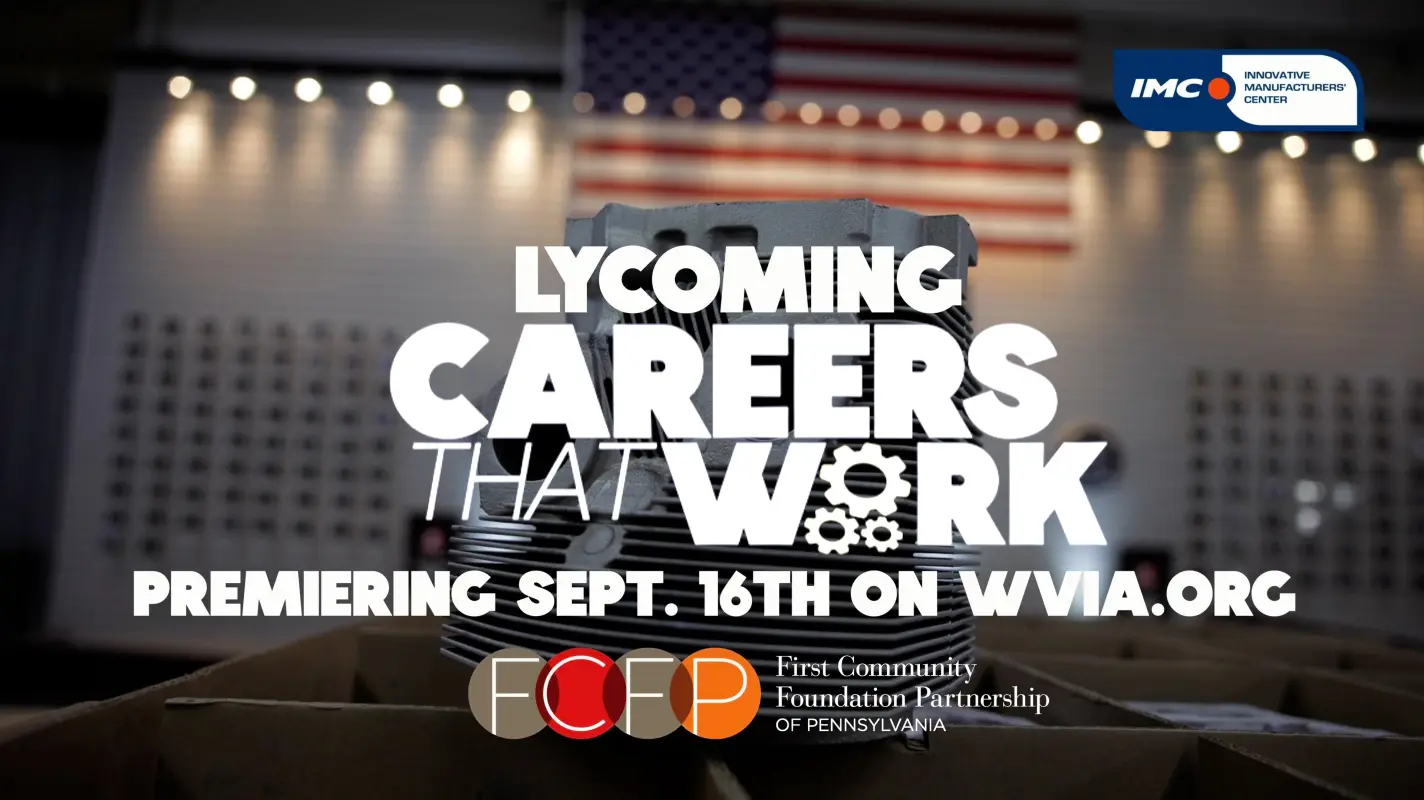
Lycoming Careers that Work

Lycoming Careers that Work

IMC is proud to have partnered with WVIA to support the launch of the Lycoming Careers that Work video series, an initiative designed to showcase the rewarding career opportunities available in Lycoming County’s manufacturing sector and connect future talent with local employers.

When WVIA sought manufacturing companies to feature in the series, IMC helped identify and connect manufacturers across Lycoming County that were willing to share their stories, highlight their operations, and provide viewers with an inside look at the people and technologies driving modern manufacturing.

The series offers students, job seekers, educators, parents, and community members a firsthand look at the diverse careers available within manufacturing, from skilled trades and technical positions to engineering, quality assurance, operations, leadership, and more.

“Manufacturing continues to be one of the most important economic drivers in Central Pennsylvania, offering rewarding careers, opportunities for advancement, and the chance to work with innovative technologies,” said Dennis Gilbert, IMC President. “By helping tell the stories of local manufacturers and their employees, this initiative increases awareness of the exciting opportunities that exist right here in our communities.”

As manufacturers across Pennsylvania continue to face workforce challenges, career awareness remains a critical component of building a strong talent pipeline. Programs such as Lycoming Careers that Work help address misconceptions about the industry while demonstrating the modern, technology-driven environments where today’s manufacturing professionals build successful careers.

IMC believes partnerships between manufacturers, community partners, and media outlets play a vital role in helping individuals understand the breadth of opportunities available in manufacturing and encouraging individuals to explore careers in the industry.

“We are grateful to WVIA for investing in workforce awareness and career exploration through this program,” said Gilbert. “We’re also thankful to the manufacturers that participated and opened their doors to share their experiences. Their willingness to showcase their facilities and employees helps inspire future workers and strengthens our region’s workforce development efforts.”

The featured manufacturers represent the innovation, resilience, and economic impact that define Lycoming County’s manufacturing community. Their participation helps highlight how manufacturing careers contribute not only to individual success but also to the long-term vitality of local communities and the regional economy.

IMC remains committed to supporting manufacturers through workforce development, training, operational excellence, and growth initiatives that strengthen the manufacturing sector throughout Central Pennsylvania.

To learn more about the Lycoming Careers that Work series and view the featured manufacturing videos, visit WVIA’s Careers that Work webpage.



AI for HR: How to Focus on People Not Paperwork

Job search concept. HR or Hiring Human Resources, unemployment finding job search for resume register job interview, find your career. headhunting and recruitment process.

Finding skilled workers. Managing onboarding. Keeping employees engaged. Tracking training. Staying compliant with ever-changing regulations. For many small and mid-sized manufacturers, these responsibilities fall on a single HR professional, office manager, or business leader already juggling multiple priorities.

At the same time, workforce challenges continue to grow. Open positions take longer to fill, employee expectations are changing, and organizations are expected to do more with fewer resources. That’s where artificial intelligence (AI) can help; not by replacing HR professionals, but by making them more effective. You don’t need to be a technology expert to use AI effectively. The most successful HR teams are learning how to use AI as a tool not as a replacement for human judgment, experience, or employee relationships.

Here are four ways AI is helping manufacturers address real-world HR challenges:

  1. Recruit Qualified Employees Faster

Writing job descriptions, screening resumes, and communicating with candidates can consume hours each week. AI tools can help streamline these processes, allowing HR teams to focus more on building relationships with candidates and less on administrative tasks. AI can also help improve communication throughout the hiring process, creating a better candidate experience.

  1. Create a Stronger Onboarding Experience

A consistent onboarding process helps new employees become productive faster and feel more connected to the organization. AI can assist with onboarding workflows, answer common questions, and provide resources to new hires, helping teams deliver a better experience while reducing administrative burden.

  1. Improve Employee Development and Retention

Retaining skilled employees is just as important as finding them. AI can help identify skill gaps, recommend personalized learning opportunities, and support employee development initiatives that keep workers engaged and prepared for future roles.

  1. Make Better Workforce Decisions

From workforce planning to compliance monitoring, AI can analyze data and uncover trends that may otherwise go unnoticed. These insights can help leaders make more informed decisions about staffing, training, performance, and organizational growth.

The most successful organizations aren’t using AI to replace the human side of HR.

They’re using it to eliminate repetitive tasks, improve decision-making, and create more time for meaningful employee interactions.

Whether you’re an HR professional, office manager, supervisor, or business owner responsible for workforce issues, understanding how to apply AI effectively is becoming a competitive advantage. IMC’s four-part webinar series, Using Artificial Intelligence to Support Human Resources, provides practical, real-world strategies for using AI in recruiting, onboarding, employee engagement, workforce development, analytics, and compliance which helps manufacturers build stronger, future-ready teams.

Interested in how IMC can support all of your HR needs, visit Elevating HR Practices for Manufacturing Success | IMC.


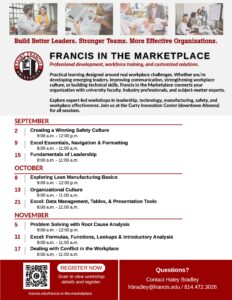
Saint Francis University Announces Fall 2026 Francis in the Marketplace Events

FiM Fall 2026 Professional Development Sessions

FiM Fall 2026 Professional Development Sessions


The Business Case for Safety: Turning Workplace Protection into a Competitive Advantage

safe_sound_week_logo_2026

As OSHA’s Safe & Sound Week ends, we reflect on the importance of effective safety and health programs and the role they play in protecting workers and strengthening organizations. OSHA’s Safe & Sound Week is designed not only to recognize safety accomplishments, but also to encourage organizations to build proactive safety programs that contribute to long-term success.

While safety is often associated with compliance and risk reduction, leading manufacturers recognize that it can also serve as a powerful competitive advantage. In today’s business environment, customers, partners, employees, and investors increasingly evaluate companies based on their commitment to safety, operational excellence, and workforce wellbeing.

Manufacturers that invest in safety are often better positioned to earn trust, strengthen relationships, and drive sustainable growth.

Winning Contracts and Bids

For many manufacturers, safety performance has become an important factor in the bidding and procurement process.

Prospective customers want confidence that suppliers can operate efficiently, manage risk effectively, and deliver products without disruptions. A strong safety record demonstrates that an organization takes its responsibilities seriously and has established processes to protect its workforce and maintain reliable operations.

In many industries, safety metrics, training programs, and incident histories are reviewed alongside quality, cost, and delivery performance when evaluating potential business partners.

Strong safety performance can help manufacturers stand out in a competitive marketplace.

Enhancing Brand Reputation

Reputation is one of an organization’s most valuable assets.

Companies that prioritize employee safety and wellbeing are often viewed as responsible employers, trusted business partners, and respected community members. Conversely, workplace incidents can negatively impact public perception and stakeholder confidence.

A visible commitment to safety sends a positive message about your values, leadership, and culture.

When manufacturers consistently demonstrate care for their employees and commitment to operational excellence, they strengthen their brand and build credibility with customers, partners, and prospective employees.

Building Supply Chain Trust

Strong supply chains depend on reliability.

Customers and business partners need assurance that suppliers can maintain production, meet delivery commitments, and effectively manage operational risks. Robust safety programs contribute to that confidence by helping organizations reduce disruptions, avoid costly incidents, and maintain business continuity.

Organizations known for safe and dependable operations are often viewed as lower-risk partners, helping strengthen long-term business relationships and create new opportunities for collaboration.

Safety is not just an internal initiative. It is an important component of being a trusted supply chain partner.

Supporting Long-Term Sustainable Growth

Sustainable growth requires more than increasing production or expanding market share. It requires building an organization that is resilient, adaptable, and positioned for long-term success.

Strong safety cultures support that goal by helping you:

  • Protect employees
  • Reduce operational disruptions
  • Improve workforce engagement
  • Strengthen organizational performance
  • Support continuous improvement efforts

The most successful manufacturers understand that safety is not separate from business strategy. It is a critical element of operational excellence and sustainable growth.

Companies that invest in their people and their workplace culture are often the same companies that achieve lasting success.

Safety as a Strategic Advantage

Throughout Safe & Sound Week, we’ve explored how safety can improve productivity, strengthen employee retention, reduce business risk, and enhance leadership effectiveness. Together, they illustrate an important reality: safety is more than a compliance obligation. It is a business strategy.

At IMC, we help manufacturers strengthen operations through training, continuous improvement, leadership development, and safety-focused initiatives that support both employee well-being and business performance.

Now is the perfect time to ask:

Is safety simply a requirement within your organization, or is it becoming a competitive advantage?

The manufacturers that answer that question successfully will be better positioned to attract talent, earn customer trust, improve performance, and achieve sustainable growth in the years ahead.


What High-Performing Manufacturing Leaders Do Differently About Safety

safe_sound_week_logo_2026

As OSHA’s Safe & Sound Week continues, manufacturers are encouraged to recognize the critical role leadership plays in building and sustaining effective safety and health programs. OSHA identifies management leadership as a cornerstone of successful workplace safety efforts, helping organizations proactively identify hazards, engage employees, and create safer work environments.

While policies, procedures, and training are essential, the strongest safety cultures don’t begin with a checklist. They begin with leadership. The most successful manufacturing leaders understand that safety is not a department or a program. It’s a shared organizational value that influences every decision, every process, and every employee.

The difference between an average safety program and an exceptional one often comes down to how leaders approach safety.

Looking Beyond Lagging Indicators

Many organizations measure safety performance using lagging indicators such as recordable incidents, lost-time injuries, or workers’ compensation claims. While these metrics are important, they only tell part of the story.

High-performing leaders also focus on leading indicators, which help predict and prevent future incidents. These may include:

  • Safety observations
  • Near-miss reporting
  • Employee participation in safety activities
  • Training completion rates
  • Hazard identification and corrective actions

Leading indicators provide insight into the health of a safety culture before an incident occurs. Instead of simply measuring what went wrong, organizations can track the actions that help keep employees safe.

Visible Leadership Involvement Matters

Employees pay close attention to leadership behavior.

When leaders regularly discuss safety, participate in facility walkthroughs, attend safety meetings, and engage employees in conversations about workplace hazards, they demonstrate that safety is a business priority.

Visible involvement sends a powerful message that safety is not just a requirement, but an expectation shared throughout the organization.

The strongest safety cultures are built when employees see leaders actively supporting and reinforcing safe work practices.

Creating Safety Ownership at Every Level

Effective leaders understand they cannot build a strong safety culture alone.

Safety ownership should extend throughout the organization, from executives and supervisors to frontline employees. Every individual should understand their role in identifying risks, reporting concerns, and contributing to a safer workplace.

When employees feel empowered to speak up and participate in safety initiatives, organizations benefit from greater engagement, stronger communication, and improved hazard awareness.

Safety becomes something employees do with leadership, not something leadership does to employees.

Building a Culture of Accountability

Accountability is often misunderstood as discipline or enforcement.

In reality, a culture of accountability is built on clear expectations, consistent communication, training, and follow-through. Employees should understand not only what is expected of them, but also why those expectations matter.

Strong leaders recognize and reward positive safety behaviors while addressing gaps constructively and consistently.

When accountability exists at every level of the organization, safety becomes embedded in daily operations rather than treated as a standalone initiative.

Leadership Sets the Tone

The most successful manufacturers recognize that safety performance reflects organizational leadership.

When leaders actively support safety, employees are more engaged, communication improves, and safety becomes part of the company’s culture rather than simply a compliance obligation. The result is a safer, stronger, and more resilient organization.

At IMC, we help manufacturers develop leaders who can drive continuous improvement, strengthen workforce engagement, and foster cultures where safety is everyone’s responsibility. Let’s Create a Winning Safety Culture | IMC together!

As Safe & Sound Week reminds us, safety is not just about preventing incidents. It’s about creating an environment where leadership, accountability, and employee involvement work together to support long-term success.


Beyond Compliance: How Safety Protects Your Business from Costly Risks

safe_sound_week_logo_2026

As OSHA’s Safe & Sound Week continues, manufacturers are encouraged to view workplace safety as more than a compliance requirement. Effective safety and health programs help organizations identify and address hazards before they lead to injuries, disruptions, or other business impacts. While protecting employees is always the primary goal, strong safety programs also play a critical role in managing financial, operational, legal, and reputational risk.

For many organizations, risk management discussions focus on cybersecurity, supply chain disruptions, or market uncertainty. Yet one of the most controllable business risks often exists on the plant floor. A proactive approach to safety can help manufacturers reduce unexpected costs, maintain operations, and strengthen long-term resilience.

Workers’ Compensation Costs

Workplace injuries can create significant direct and indirect costs for manufacturers.

Beyond medical expenses and workers’ compensation claims, incidents often lead to lost productivity, overtime costs, administrative time, and training expenses associated with replacement workers. Even a single recordable injury can have lasting financial implications.

Strong safety programs help reduce the likelihood of incidents occurring in the first place, allowing organizations to focus resources on growth and improvement rather than recovery.

Regulatory Fines and Audits

Manufacturers operate in a highly regulated environment where safety compliance is an ongoing responsibility.

Failure to address workplace hazards or maintain proper safety procedures can result in citations, fines, increased scrutiny, and operational disruptions. Organizations that prioritize safety are often better positioned to maintain compliance and demonstrate their commitment to protecting employees.

A proactive safety culture helps move organizations from reacting to issues after they occur to preventing them before they become regulatory concerns.

Liability Exposure

Every incident carries the potential for legal and financial consequences.

Accidents can impact employees, customers, contractors, and visitors, creating liability risks that extend beyond the immediate event. Thorough training, documented procedures, hazard assessments, and employee engagement help demonstrate an organization’s commitment to providing a safe workplace.

While no organization can eliminate all risk, a strong safety program can significantly reduce exposure and strengthen an organization’s ability to respond effectively when issues arise.

Business Continuity and Resilience

Safety and business continuity are closely connected.

A serious workplace incident can disrupt production schedules, delay customer deliveries, create staffing challenges, and impact overall operational performance. In some cases, recovery can take weeks or months.

Organizations with mature safety programs are often better prepared to maintain stability during unexpected events because they have established processes, clear responsibilities, and a culture focused on prevention and continuous improvement.

The result is greater resilience and a stronger ability to adapt when challenges occur.

Safety Is an Investment in Business Stability

The most successful manufacturers recognize that safety is not separate from business performance. It is a fundamental component of operational excellence and risk management.

At IMC, we work with manufacturers to strengthen operations through workforce training, continuous improvement, leadership development, and safety-focused initiatives that help reduce risk while improving performance. Take the next step with IMC’s OSHA 10‑Hour Training | IMC

As we observe Safe & Sound Week, it’s worth considering a simple question: Is your safety program merely helping you comply with regulations, or is it actively helping you protect and strengthen your business?


People Stay Where They Feel Safe: The Link Between Safety and Employee Retention

safe_sound_week_logo_2026

As OSHA’s Safe & Sound Week continues, manufacturers are encouraged to look beyond compliance and consider the broader impact of workplace safety. Effective safety and health programs help protect employees while also supporting a stronger, more engaged workforce. In today’s competitive labor market, commitment to safety can be a powerful tool for attracting and retaining talent.

For many manufacturers, recruiting and retaining skilled workers remains one of the biggest challenges facing the industry. While competitive wages and benefits matter, employees also want to know that their employer is committed to providing a safe and healthy work environment. Simply put, people are more likely to stay with organizations where they feel valued, respected, and protected.

Employees Value Employers Who Protect Them

A strong safety culture sends a clear message: people matter.

When employees see leadership investing in training, hazard prevention, proper equipment, and safe work practices, they recognize that the organization is committed to their well-being. That commitment builds trust and strengthens the relationship between employees and management.

Safety is more than a policy manual or a set of procedures. It’s a visible demonstration that an organization cares about its workforce.

Reduced Turnover and Absenteeism

Workplace injuries can have ripple effects throughout the organization. Beyond the direct impact on employees, incidents often lead to increased absenteeism, staffing challenges, and lost productivity.

Manufacturers that prioritize safety create more stable work environments where employees can perform their jobs confidently and consistently. Fewer incidents mean less disruption, helping manufacturers maintain production schedules while reducing the costs associated with turnover and replacement hiring.

Improved Morale and Engagement

Employees who feel safe at work are often more engaged in their jobs.

A positive safety culture encourages communication, teamwork, and employee involvement. Workers are more likely to share ideas, identify improvement opportunities, and take ownership of workplace initiatives when they believe their voices are heard and their concerns are addressed.

Strong engagement doesn’t just improve safety outcomes. It can improve quality, productivity, and overall organizational performance.

Building an Employer-of-Choice Reputation

Manufacturers are competing for talent in a challenging labor market. Companies known for prioritizing employee safety and wellbeing often have an advantage when recruiting new workers.

A reputation for safety demonstrates professionalism, operational excellence, and commitment to employees. It tells prospective workers that the organization invests in creating a workplace where people can build successful, long-term careers.

In today’s workforce environment, that reputation can be a significant competitive advantage.

Safety and Workforce Training Go Hand in Hand

At IMC, we work with manufacturers to strengthen both their operations and their workforce. Safety culture, employee engagement, leadership development, and continuous improvement all play important roles in creating workplaces where employees want to stay and grow.

As we recognize Safe & Sound Week, it’s worth remembering that one of the most effective retention strategies isn’t found in a recruitment campaign or a compensation package. It’s found in the daily commitment to creating a workplace where every employee feels safe, supported, and valued. Check out IMC’s upcoming program “Create a Winning Safety Culture” being held in Altoona and Williamsport – Create a Winning Safety Culture | IMC


The Hidden Productivity Engine: Why Safe Plants Outperform Unsafe Ones

safe_sound_week_logo_2026

This week is OSHA’s Safe & Sound Week, a nationwide event dedicated to recognizing and improving workplace safety and health programs. At IMC, we see safety as more than a compliance requirement. It’s a key component of operational excellence. The same practices that help manufacturers reduce risk often improve efficiency, strengthen workforce engagement, and support long-term business growth.

The Hidden Productivity Engine: Why Safe Plants Outperform Unsafe Ones

When manufacturers think about productivity improvements, they often focus on equipment, technology, automation, or workforce training. Yet one of the most overlooked drivers of operational performance is workplace safety.

High-performing manufacturers understand that safe and efficient operations go hand in hand. OSHA notes that effective safety and health programs help identify and control hazards before injuries occur, improving sustainability and business performance.

Key Points

  1. Reduced Incident-Related Downtime

Every injury creates disruption:

  • Production interruptions
  • Supervisor time spent investigating incidents
  • Schedule delays
  • Potential equipment stoppages
  • Overtime to cover absent employees

Preventing incidents keeps production moving.

  1. Improved Workflow Consistency

Safe processes are often standardized processes. When work instructions, visual controls, and operating procedures are clear, employees can perform tasks more consistently and safely.

  1. Higher Employee Focus and Performance

Employees perform better when they feel valued and protected. Strong safety cultures help build trust, engagement, and accountability across the workforce.

  1. Safety Supports Continuous Improvement

Many of the same improvements that reduce waste and improve efficiency also reduce risk:

  • 5S and workplace organization
  • Visual management
  • Standard work
  • Process optimization

This is where IMC’s continuous improvement expertise and safety initiatives naturally intersect.

  1. Safety Is Operational Excellence

Worldclass manufacturers don’t separate safety from productivity. They view safety as a core business strategy that drives:

  • Quality
  • Efficiency
  • Employee retention
  • Operational performance

IMC Connection

At IMC, we help manufacturers strengthen operations through training, continuous improvement, and safety-focused initiatives that support both employee well-being and business performance.


Success Story: Remmey – The Pallet Company Trains Manufacturing Supervisors to Effectively Support Company Culture and Increase Operational Efficiency

Remmey – The Pallet Company, located in Beaver Springs, PA, is a privately held pallet design and manufacturing company with approximately 114 employees. For more than 70 years, Remmey has served the region’s shipping and logistics needs by producing high-quality pallets using both new lumber and recycled materials. The company remains committed to exceptional customer service and superior product quality.

In late 2025, Controller Tammy Bubb identified a need to strengthen leadership capabilities among Remmey manufacturing supervisors. Organizational changes, including the introduction of new managers and a shifting workforce demographic, highlighted gaps in supervisors’ ability to effectively engage and connect with their teams. While Remmey had already initiated an internal development program, the company recognized the value of supplementing these efforts with external expertise to ensure a consistent, sitewide approach to front-line leadership effectiveness.

Remmey partnered with IMC to deliver a comprehensive Supervisor Effectiveness Training program tailored to its manufacturing environment. The training focused on equipping front-line leaders with critical skills and insights like distinguishing the differences between supervisor, manager, and leader; enhancing communication and active listening techniques; approaching workplace conflict constructively; understanding generational differences within the workforce; improving effective engagement; and developing coaching and mentoring capabilities to maximize team performance.

Through this initiative, manufacturing supervisors gained a stronger understanding of effective leadership practices and practical tools to apply in their daily roles. As a result, supervisors have demonstrated improved engagement with their teams, fostered more positive workplace relationships, and contributed to enhanced operational efficiency.

Testimonial:

“The IMC Supervisor Effectiveness Training exceeded our expectations and provided valuable tools that supervisors can immediately apply in the workplace. The sessions were engaging, relevant, and challenged participants to think differently about communication, coaching, employee engagement, and leadership. The training helped create a stronger foundation for leadership development within our organization and reinforced the importance of working together to achieve common goals. We appreciate IMC’s expertise and look forward to continuing our leadership development journey through future programs.”

Tammy Bubb, Controller
Controller – Remmey The Pallet Company


Success Story: Remmey – The Pallet Company Upgrades ERP System to Automate the Custom Fuel Surcharge Process

Remmey – The Pallet Company, located in Beaver Springs, PA, is a privately held pallet design and manufacturing company with approximately 114 employees. For more than 70 years, Remmey has served the region’s shipping and logistics needs by producing high-quality pallets using both new lumber and recycled materials. The company remains committed to exceptional customer service and superior product quality.

Challenge: Slow Manual Calculation and Entry Process

The billing staff printed Fuel Surcharges (FSC) into spreadsheets, which were reviewed to manually calculate and apply the charges for over 1,000 invoices each month. These processes wasted an estimated 35-50 hours per month and increased the risk of human error, leading to customer disputes and delayed payments.

Solution: IMC Partnership & Project Development

To address this, Remmey invested in a fully customized ERP software enhancement to automate the calculation and application of FSC. This provided immediate operational improvements. IMC helped review testing processes, confirming installation satisfaction, and follow-up activities. IMC support also included exploration of grant opportunities and guidance through the grant qualification, application, and closeout processes.

Results and Business Impact:

Remmey, with the support of IMC was able to successfully participate in the DoE SMART-PA Technical Assistance mini-grant program to support this investment in their business.  The ERP upgrade, along with related training, is projected to improve billing efficiency by up to 200%, allow staff to invest time in higher-value activities, and lay the foundation for future integration of IIoT, MRP, and automation technologies.

Testimonial:

“IMC provided timely insight, valuable support, and expert guidance throughout the SMART-PA grant and ERP enhancement project. Their assistance helped us successfully install and validate a fully customized fuel surcharge automation process that has eliminated a significant amount of manual work. We have reduced FSC-related customer disputes by more than 90%, improved the consistency and accuracy of our invoicing, and freed 35–50 hours of billing staff time each month for higher-value activities. The comprehensive training provided for our team ensured a smooth transition and rapid adoption of the new process. IMC was thorough, responsive, and supportive throughout the entire project, and we are very pleased with the results.”

Tammy J Bubb, M.S.A., M.B.A.
Controller – Remmey The Pallet Company