• Skip to primary navigation
  • Skip to main content

Innovative Manufacturers Center

Driving Manufacturing Growth and Innovation in Central Pennsylvania

  • Careers
  • IMC Blog
  • News
  • Contact Us
  • About Us
    • IMC Service Area
    • IMC Team
    • Success Stories
    • Central PA Manufacturing Companies
    • Partners & Network
    • Career Opportunities
    • Contact Us
    • Frequently Asked Questions (FAQ)
  • Services
    • People
      • Brand Development
      • Business Continuity Planning
      • Elevating HR Practices for Manufacturing Success
        • Corrective Action in Manufacturing
        • Employee Handbook Solutions for Small Manufacturers
        • How to Give Effective Performance Reviews
      • Environmental & Safety Compliance
        • Create a Winning Safety Culture
      • Lean Manufacturing User's Group
      • Manufacturing Business Growth Services
      • Sales Development
      • Strategic Succession Planning for Supervisors
      • Tooling U-SME
    • Processes
      • Continuous Improvement
      • International Trade & Export Compliance
      • ISO 9001 Certification
      • ISO Support
      • Lean Manufacturing Transformation
        • Exploring Lean Manufacturing Basics
        • Introduction to Lean Manufacturing
        • Lean Manufacturing Level One Practitioner Certification
      • Mastering Equipment Troubleshooting
      • OSHA 10‑Hour Training
      • Problem Solving with Root Cause Analysis
      • Supply Chain Optimization
    • Technology
      • AI Predictive and Prescriptive Modeling
      • AI Solutions
        • Closing Talent Gaps
        • Digital Transformation
          • Agentic AI Automation
          • Smart Manufacturing Strategy
        • Elevating Plant Intelligence
      • Clean Energy Manufacturing
      • Cybersecurity Maturity Model Certification (CMMC)
      • Digital Marketing & SEO
      • SMART-PA: Manufacturing Technology Grant
      • Technology Scouting
      • Website Design
    • Innovation
      • Innovation Engineering Systems
      • Manufacturing Automation
      • Manufacturing Innovation
      • R&D Tax Credits
      • Technology Driven Market Intelligence (TDMI)
      • Williamsport/Lycoming KIZ
        • About the Williamsport/Lycoming KIZ
        • Do I Qualify for the KIZ?
        • KIZ Tax Credits
        • Williamsport/Lycoming KIZ Benefits
        • Williamsport/Lycoming KIZ Services
  • Events
  • Training
    • People
      • Corrective Action in Manufacturing
      • Create a Winning Safety Culture
      • How to Give Effective Performance Reviews
      • Meeting the HR Challenge
      • Strategic Succession Planning for Supervisors
      • Tooling U-SME
    • Processes
      • Exploring Lean Manufacturing Basics
      • Introduction to Lean Manufacturing
      • ISO 9001 Certification
      • Lean Manufacturing Level One Practitioner Certification
      • Mastering Equipment Troubleshooting
      • OSHA 10‑Hour Training
      • Problem Solving with RCA

Meeting the HR Challenge

recruiting, selecting, onboarding

Small and mid-sized businesses, including manufacturing, face a special challenge in recruiting, selecting, onboard, upskilling or reskilling, and retaining their workers.

This virtual workshop series, offered online in 5 convenient 90-minute sessions, will address the special challenges faced by small and mid-sized businesses with attracting, selecting, onboard, engaging, and retaining workers today.

Objectives:

Upon completing this 5-session program, participants will be able to:

  • Review key workforce issues affecting employers today
  • Describe creative ways to recruit good workers
  • Summarize ways to select good workers
  • Delineate ways to onboard good workers—and explain why onboarding is so important
  • Review effective on-the-job training for new hires—and explain why it is so important
  • Discuss ways to address HR in organizations too small to hire full-time HR professionals
  • Engage workers today and list the reasons why engagement is more than a fad
  • Discuss practical approaches to drive down turnover and retain the best workers

Sessions:

Session 1 – Today’s Human Resource Challenges for Small and Mid-Sized Businesses

  • Providing an overview of the employment landscape facing small and mid-sized employers today
  • Managing HR challenges without an HR department
  • Conducting an HR audit (when the organization has no full-time HR people) to discover HR strengths and weaknesses and identify a long-term HR strategy
  • Discussing the final project for the program

Session 2 – Recruiting and Selecting Workers

  • Planning for the future workforce of the organization
  • Creating an employee handbook by establishing and implementing consistent HR policies and procedures
  • Building an employment brand and leveraging it to advantage
  • Devising effective talent acquisition and recruiting strategies
  • Creating effective job applications (rather than rely on one-size-fits-all forms)
  • Interviewing effectively using behavioral and performance interviews
  • Using the “hurdle approach” in selecting workers
  • Maintaining effective documentation of employment actions

Session 3 – Onboarding and Training Workers

  • Planning for effective onboarding
  • Reviewing the relationship between onboarding and absenteeism/turnover
  • Understanding the difference between onboarding for worker productivity and onboarding to build social relationships
  • Summarizing key issues in upskilling and reskilling workers

Session 4 – Engaging Workers and Using Effective Corrective Action

  • Defining worker engagement
  • Clarifying why worker engagement is critical to attracting and retaining talented workers
  • Reviewing ways to measure and increase worker engagement
  • Examining effective ways to address corrective action

Session 5 – Driving Down Turnover and Improving Employee Retention

  • Defining turnover
  • Reviewing what research has indicated about turnover and how to improve worker retention
  • Clarifying why worker engagement is critical to slashing avoidable turnover
  • Examining why not all turnover is bad—and why some turnover hurts more than others
  • Reviewing effective exit interviews
  • Conducting “stay” interviews
  • Final project discussions

Meeting the HR Challenge for Small and Startup Businesses Outline

Who should attend?

HR professionals, including HR Generalists, HRBP’s, HR Supervisors, Managers, Directors, and VPs. Business owners, C-suite Leaders who work with HR teams, and other organizational leaders who want to know more about improving the challenges connected with staffing, onboarding, retention, engagement, and other issues facing leading HR challenges in organizations today.

Why you should attend:

You or your team will benefit in these five ways and more…

  1. Discover approaches to an HR strategy that fits your company.
  2. Minimize or end frustrations over talent acquisition and recruiting strategies.
  3. Improve your onboarding confidence and learn strategies that build high-performance employee relationships.
  4. Gain new understanding for worker engagement that will positively impact your workplace culture.
  5. Refresh your perspective on obtaining and retaining the best employees.

Bonus Materials:

Participants will receive:

  • A draft employee handbook that can be tailored to your organization
  • A worksheet for use in creating an interview guide to use in job interviews
  • A sample employment application for use in creating one for your organization
  • A checklist for employee onboarding
  • A sample checklist for guiding on-the-job training (OJT)
  • Surveys to use for assessing employee engagement levels
  • A survey to identify ways to drive down turnover (100 research-based ways to improve employee retention)

Live Dealer Technology Growth in Canada: Casizoid Explores the Trend

Canada’s online gambling market has undergone a significant structural shift over the past several years, with live dealer technology emerging as one of the most consequential developments in the sector. What began as a niche offering available only on a handful of offshore platforms has matured into a core product category that now accounts for a substantial portion of player engagement and operator revenue. The growth is not incidental — it reflects a convergence of regulatory reform, infrastructure investment, and changing player expectations that together have reshaped what Canadian gamblers consider a standard online casino experience.

The Regulatory Foundation Behind the Expansion

Understanding why live dealer technology has grown so rapidly in Canada requires examining the regulatory environment that enabled it. For much of the 2000s and early 2010s, online gambling in Canada existed in a legal grey zone. The Criminal Code of Canada permitted provincially operated gambling, but the framework for licensing private online operators was largely absent. This began to change meaningfully in 2021 when Ontario announced plans to open a regulated private online gambling market, which officially launched in April 2022 under the Alcohol and Gaming Commission of Ontario (AGCO). This was a pivotal moment — it created a compliant pathway for international operators to enter one of Canada’s largest provincial markets while meeting specific technical and consumer protection standards.

Live dealer products were directly affected by this shift. Under the iGaming Ontario framework, operators must meet standards around game integrity, data handling, and responsible gambling tools that apply equally to live dealer studios as to software-based games. This meant that studios — whether operated by the casino brand itself or supplied by third-party providers — had to demonstrate compliance with Ontario’s technical standards. The result was an influx of well-resourced, licensed operators bringing high-quality live dealer infrastructure into the market rather than the lower-quality streams that had previously characterized offshore offerings available to Canadian players.

How Live Dealer Studios Have Evolved Technically

The technical architecture behind live dealer gaming has changed considerably since the format first appeared in the mid-2000s. Early implementations suffered from latency issues, low video resolution, and limited interactivity — problems that made the experience feel more like watching a stream than participating in a game. By the late 2010s, improvements in video compression, the widespread availability of high-speed broadband, and the adoption of optical character recognition (OCR) technology had resolved most of these foundational problems. OCR allows the system to read physical game elements — cards, roulette wheels, dice — and translate them into data that feeds the game interface in real time, enabling accurate side bets, statistics overlays, and history tracking.

The current generation of live dealer technology goes further. Studios operated by major suppliers such as Evolution Gaming, Pragmatic Play Live, and Playtech now use multi-camera setups with automated switching, game show formats that incorporate randomized bonus rounds, and localized tables staffed by dealers who speak French or English to serve Canadian players specifically. Evolution’s launch of its dedicated North American studio in New Jersey — which also supplies content to Canadian-facing operators — marked a shift toward region-specific production rather than generic global feeds. Mobile optimization has also become standard; the majority of live dealer sessions in Canada are now conducted on smartphones, which has driven studios to redesign their interfaces for portrait-mode viewing and one-handed interaction.

Reviews and comparative analysis published on Casizoids reflect how significantly the technical gap between live dealer and land-based casino experiences has narrowed, with players increasingly reporting that the convenience of remote access outweighs the social atmosphere of physical venues for routine play sessions.

Player Behaviour and Market Demand in Canada

Canadian players have shown a measurable preference for live dealer formats over purely software-driven alternatives, a trend that has been documented in operator data since at least 2019. Several factors contribute to this. Trust is a significant driver — many players remain skeptical of random number generators (RNGs) despite third-party auditing, while a live dealer game provides visible, real-time confirmation that outcomes are not pre-determined by software. This psychological dimension is particularly relevant in markets like Canada where consumer protection awareness is relatively high and players are more likely to research the platforms they use.

The demographic profile of live dealer players in Canada also differs from the general online casino audience. Research from operators and market analysts suggests that live dealer formats attract a higher proportion of players who previously gambled exclusively at land-based venues — a segment that grew substantially during the COVID-19 pandemic when physical casinos were closed. Many of these players, having adopted online platforms out of necessity between 2020 and 2022, retained their digital habits afterward but gravitated toward live dealer products as the closest functional equivalent to what they had experienced in person. This created a durable new segment of live dealer users rather than a temporary spike.

Game variety has also expanded to match demand. Beyond the traditional offerings of live blackjack, baccarat, and roulette, Canadian players now have access to live versions of poker variants, game show hybrids like Crazy Time and Monopoly Live, and localized versions of games such as Sic Bo and Dragon Tiger that appeal to specific demographic communities within Canada’s multicultural population. Operators serving the Ontario regulated market have reported that live game show formats in particular have attracted younger players who might not have engaged with traditional table game formats.

Challenges and the Road Ahead for Canadian Operators

Despite the growth trajectory, live dealer technology in Canada is not without its structural challenges. The cost of operating or licensing live dealer content is substantially higher than offering RNG-based slots or table games. Studio infrastructure, dealer staffing, licensing fees to content suppliers, and the bandwidth requirements of continuous high-definition video streams all contribute to a cost base that smaller operators struggle to absorb. This has created a degree of market consolidation, with a smaller number of well-capitalized operators able to offer comprehensive live dealer lobbies while others rely on a limited selection of third-party content.

Regulatory fragmentation across provinces also presents a complication. Ontario’s regulated market is currently the only province with a framework for licensed private online casino operators, meaning that players in British Columbia, Quebec, Alberta, and elsewhere are either limited to provincially operated platforms — such as PlayNow in British Columbia or Espace-jeux in Quebec — or continue to access offshore sites. Provincial operators have been slower to adopt advanced live dealer technology compared to private operators competing in Ontario’s open market, which creates an uneven experience for Canadian players depending on where they reside. Discussions around expanding regulated private markets to other provinces have been ongoing, but no concrete timelines have been announced as of mid-2025.

Casizoid has documented how these regulatory disparities affect the range of live dealer products available to players in different parts of the country, noting that the gap between Ontario’s offering and those in other provinces has widened as private operators continue to invest in their live dealer portfolios. Whether other provincial governments will move toward similar open-market models remains an open question, though the revenue data from Ontario’s first two years of operation has provided a compelling economic argument for doing so.

Live dealer technology in Canada is best understood not as a single product category but as an evolving ecosystem that sits at the intersection of broadcasting, gaming regulation, consumer behaviour, and software engineering. The growth seen over the past five years has been driven by specific, traceable factors — Ontario’s regulatory reform, post-pandemic shifts in gambling habits, and sustained investment from international studio operators — rather than by any single technological breakthrough. As the regulatory landscape in other provinces develops and as mobile infrastructure continues to improve, the live dealer segment is positioned to deepen its role as the primary competitive differentiator among online casino operators serving Canadian players.

Meet our presenter for this event…

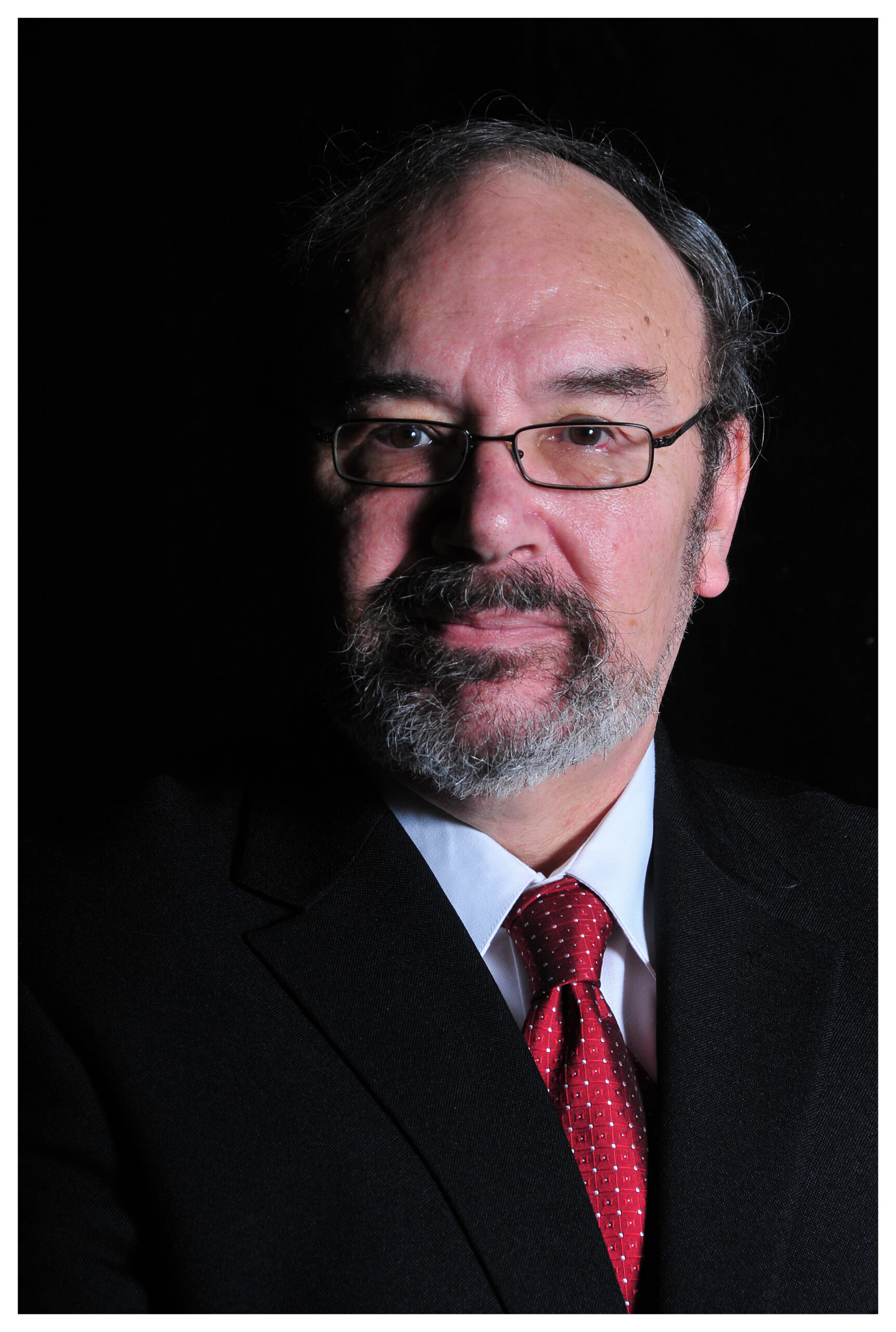
William J Rothwell

William J. Rothwell, PhD. is President of Rothwell & Associates, Inc., President of Rothwell & Associates, LLC, and President of Rothwell & Associates Korea. He has worked full-time in human resources, training and organization development in both government (the Illinois Office of the Auditor General) and in a multinational company (American Brands, #48 on the Fortune 500 list) from 1979 until 1993. He has been a consultant for over 50 multinational companies. He has served many manufacturing clients in both the U.S. and abroad. Some of his clients include: Ford Motor Company, General Motors, Siemens, Sony, Phillips, Erickson, and HP. In addition to serving as the President of three consulting firms, he and his wife, have several other successful for-profit business endeavors in Pennsylvania.

Dr. Rothwell is a prolific author, coauthor, editor, or coeditor. Since 1987 he has published more than 130 books, edited 24 books in various book series, and authored numerous training packages, guides, technical reports, and scholarly articles. Complimenting his vast experience as an internationally recognized consultant, he also spent several decades serving The Pennsylvania State University as a Distinguished Professor in the Workforce Education and Development program in the Department of Learning and Performance Systems, College of Education, on the University Park Campus. He holds top-level certifications and credentials with National SHRM and ATD.
Contact IMC to learn more.

SHRM Recertification Provider

IMC is recognized by SHRM to offer Professional Development Credits (PDCs) for SHRM-CP® or SHRM-SCP® recertification activities.

Testimonials


Remmey The Pallet Company

“The IMC Supervisor Effectiveness Training exceeded our expectations and provided valuable tools that supervisors can immediately apply in the workplace. The sessions were engaging, relevant, and ch… Read more

Tammy BubbControllerRemmey The Pallet Company


Remmey The Pallet Company

“IMC provided timely insight, valuable support, and expert guidance throughout the SMART-PA grant and ERP enhancement project. Their assistance helped us successfully install and validate a fully cu… Read more

Tammy BubbControllerRemmey The Pallet Company


Shumaker Industries, Inc.

“The IMC team provided valuable insight throughout the assessment process and helped us develop a clear roadmap for future growth. Their expertise enabled us to identify opportunities to improve effic… Read more

Mike SellersGeneral ManagerShumaker Industries, Inc.


Northway Industries, Inc.

“Through the Winning Teams program, we increased throughput in our laminate cleaning/inspection area by 18%, which also shortened the time for us to respond to vendors about defective products and t… Read more

Steve WagnerDirector of Training & DevelopmentNorthway Industries, Inc.


Rockland Manufacturing Co.

“We’re very pleased with the results of the training. It was a great way to break the ice regarding a systemic change in one of our oldest and most experience facilities. By training on change man… Read more

Bo PrattPresidentRockland Manufacturing Co.


Pik Rite, Inc.

The IMC and its staff have played an integral part in the success of Pik Rite’s Continuous Improvement culture as well as directly influencing more efficient production and operations. The proof is … Read more

Caleb ThomasProduct Line ManagerPik Rite, Inc.


NuVisions Center

We are a small organization and do not have IT staff. Before we found IMC, the task to implement CMMC seemed almost insurmountable. With their help, the process was no longer overwhelming, and we were… Read more

Terry KnouseVice President of OperationsNuVisions Center


SilcoTek

5 Whys, SIPOC, Value Stream Maps, etc. are great ways to visualize problems that are difficult to pinpoint.

Brandon SmithQuality Control Lead TechnicianSilcoTek


Prysmian Group

The attendees of both training programs came away energized and eager to apply their new skills in training, coaching and communications. There is broad consensus that these skills should continue to … Read more

Jeanette WraggTraining ManagerPrysmian Group


Nittany Paper Mills, Inc.

We make investments where and when our workforce is skilled and ready.  The training was a solid foundation for supervisor development.

Steve PrentissVice President of Human ResourcesNittany Paper Mills, Inc.


Newsletter Signup

Sign up for IMC’s newsletter to get the latest news on manufacturing in Central Pennsylvania.

"*" indicates required fields

This field is for validation purposes and should be left unchanged.

By providing your email, you agree to receive future email correspondence from IMC.


Upcoming Events


Aug


13


Featured


4:00 pm – 6:00 pm


Funding Connections: Investors, Incentives & Tax Credits


Aug


20


Featured


9:00 am – 10:00 am


ISO 9001:2026 Is Coming, Are You Ready?


Sep


2


Featured


9:00 am – 12:00 pm


Create a Winning Safety Culture


Sep


10


Featured


9:00 am – 12:00 pm


AI in Marketing: Practical Applications, Prompting, and Business Strategy


Sep


15


Featured


9:00 am – 10:30 am


Webinar Series: Using Artificial Intelligence to Support Human Resources


View Calendar


News

IMC Welcomes New Members to its Board of Directors

IMC is excited to announce the appointment of Ken Healy, Executive Vice President & Director of Engineering at PMF Industries, Inc. located in Williamsport, PA and Tammy Bubb, Corporate Controller at Remmey – The Pallet …

Read More

IMC Announces Fall Training Calendar for Central Pennsylvania Manufacturers

IMC Announces Fall Training Calendar for Central Pennsylvania Manufacturers IMC has officially released its upcoming fall training calendar, offering a broad range of professional development opportunities designed to help Central Pennsylvania manufacturers strengthen their …

Read More

Why Your Manufacturing Firm Needs AI Agentic Systems — Now

Modern manufacturing is facing a perfect storm: retiring experts, widening skill gaps, rising complexity, and increasing pressure for efficiency. AI agentic systems offer a practical, immediate path to protect your knowledge, empower your workforce, …

Read More

Copyright © 2026 IMC, Inc - Site Developed by Pineapple PC

One College Avenue, Dept. 32 Williamsport, PA 17701-5799