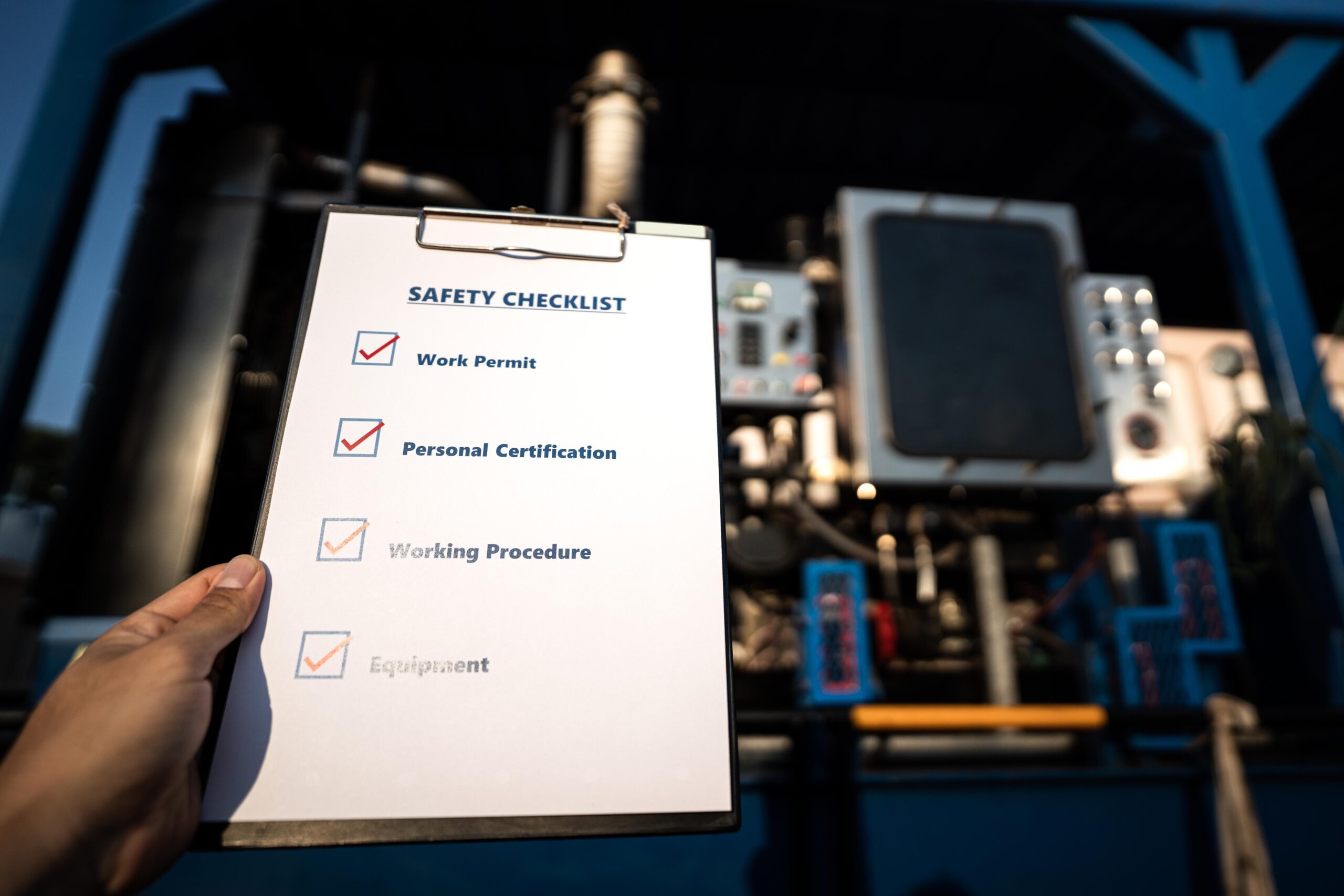
Building a Safer Workplace – From Day One
Workplace safety isn’t optional — it’s foundational. Our in‑person OSHA 10‑Hour course gives your team the essential knowledge and skills to recognize common hazards, understand regulatory basics, and help prevent accidents before they happen. It’s more than compliance — it’s commitment to a safer, stronger workforce.
What You’ll Learn
- Recognize Common Hazards: Identify everyday workplace risks — from machine guarding to materials handling, fire prevention, electrical hazards, and slip/trip/fall dangers
- Understand Rights & Responsibilities: Learn how Occupational Safety and Health Administration (OSHA) operates, what employees’ rights are, and what employers must provide to maintain a safe workplace
- Safety Best Practices & Prevention: Gain practical, real-world guidance on hazard prevention, emergency planning, safe work practices, personal protective equipment (PPE), and hazard communication
- Certification & Compliance Awareness: Upon completion, participants receive an official OSHA card — a recognized credential demonstrating safety training and awareness.
Why It Matters
A well-trained workforce is one of your strongest safety assets. OSHA 10‑Hour training helps you:
- Protect your people — and your bottom line: Minimizing accidents reduces downtime, liability, and workers’ compensation costs
- Demonstrate commitment to safety and compliance: Provide documentation showing your workforce is informed and trained — which supports compliance and builds trust with employees, clients, and regulators
- Build a strong safety culture: When employees understand hazards and safe practices, safety becomes part of daily operations — not just a checklist
- Lay a foundation for ongoing safety initiatives: This entry-level training sets the stage for deeper safety programs, refresher training, or supervisor-level courses as your business grows
Who Should Attend
This training program is ideal for frontline workers and new hires, maintenance, production, and operations staff, supervisors and team leads, and employers who want to ensure all staff understand their rights and responsibilities under OSHA
How Crypto Payments Are Reshaping Horse Racing Wagering in America, According to Betzonic
Horse racing has maintained a dedicated wagering culture in the United States for well over a century, built on a legal framework that predates most modern gambling regulations. The Interstate Horseracing Act of 1978 established the foundation for pari-mutuel wagering across state lines, and for decades, bettors operated within a system that relied almost entirely on cash transactions, bank transfers, and credit or debit card deposits. That infrastructure, while functional, carried friction — processing delays, transaction fees, and geographic restrictions that limited participation. The emergence of cryptocurrency as a payment mechanism is now introducing a structural shift in how American horseplayers fund accounts, collect winnings, and engage with both domestic and offshore wagering platforms. This shift is not merely cosmetic. It reflects deeper changes in how a new generation of bettors thinks about financial privacy, transaction speed, and the relationship between digital assets and regulated gambling markets.
The Infrastructure Gap That Crypto Is Filling
Traditional banking has always had an uneasy relationship with online gambling in America. The Unlawful Internet Gambling Enforcement Act of 2006, known as UIGEA, placed compliance burdens on financial institutions processing gambling-related transactions, which led many banks and payment processors to decline deposits to wagering platforms outright. Horse racing was carved out as an exemption under the Interstate Horseracing Act, meaning legal advance deposit wagering operators like TwinSpires, TVG, and BetAmerica were technically permitted to accept electronic payments. In practice, however, bettors frequently encountered declined transactions, holds on withdrawals, and inconsistent processing times that frustrated the experience.
Cryptocurrency sidesteps this friction almost entirely. Because blockchain-based transactions are peer-to-peer and do not route through traditional banking intermediaries, they are not subject to the same UIGEA compliance triggers. A bettor sending Bitcoin or Ethereum to a wagering platform is initiating a direct transfer on the blockchain, with confirmation times ranging from minutes to under an hour depending on network conditions and the asset used. Stablecoins like USDC or USDT have added another layer of practicality, offering the speed of crypto without the price volatility that makes Bitcoin an imperfect unit of account for wagering balances. For horseplayers who have historically lost wagers to processing delays rather than poor handicapping, this represents a meaningful operational improvement.
Regulatory Positioning and the Current Legal Landscape
The regulatory picture for crypto payments in horse racing wagering is genuinely complex, and it varies considerably depending on whether a platform operates under a domestic advance deposit wagering license or is based offshore. Domestically licensed ADW operators are regulated by individual state racing commissions, and most of those commissions have not yet issued formal guidance on cryptocurrency deposits. New York, California, and Kentucky — three of the most significant horse racing jurisdictions — had not, as of 2024, published explicit rules permitting or prohibiting crypto as a funding method for licensed ADW accounts. This regulatory ambiguity has created a cautious posture among licensed domestic operators, most of whom continue to rely on ACH transfers, debit cards, and PayPal-style payment processors.
Offshore wagering platforms, which operate outside United States licensing frameworks but serve American bettors in a legal gray area, have moved considerably faster. Several offshore books that accept horse racing wagers began accepting Bitcoin deposits as early as 2014, and by 2022, the majority of established offshore platforms had expanded to include Ethereum, Litecoin, and various stablecoins. The appeal for these operators is straightforward: crypto removes the need to maintain relationships with American payment processors, reduces chargeback risk, and attracts a technically sophisticated customer segment. Betzonic has examined this divergence in adoption rates between domestic and offshore operators, noting that the gap is likely to narrow as state racing commissions develop clearer frameworks in response to bettor demand.
Industry observers who follow developments on the Betzonic site have noted that the conversation around crypto in horse racing wagering has matured considerably since 2020, moving from novelty discussions toward substantive analysis of compliance pathways, tax reporting obligations, and the practical mechanics of blockchain-based pari-mutuel pools. That evolution in discourse reflects genuine market pressure from bettors who hold crypto assets and prefer not to liquidate them into fiat currency before placing a wager.
How Blockchain Technology Could Alter Pari-Mutuel Pool Mechanics
Beyond payments, a more structurally significant development involves the application of blockchain technology to pari-mutuel pool management itself. Pari-mutuel wagering, by design, aggregates all bets into a common pool and distributes winnings proportionally after the track take is removed. This system requires a trusted central operator to manage the pool, calculate odds, and distribute payouts — functions that have traditionally been performed by licensed totalisator companies like Scientific Games and Sportech. Smart contracts on programmable blockchains like Ethereum could theoretically automate these functions without a central intermediary, creating a transparent, auditable wagering pool where every transaction is recorded on-chain and payouts are executed automatically when race results are submitted.
Several blockchain-native wagering projects attempted to build decentralized pari-mutuel systems between 2017 and 2021, with mixed results. The primary challenges were not technical but practical: oracle problems around submitting verified race results on-chain, liquidity fragmentation across competing platforms, and the difficulty of achieving regulatory recognition for a decentralized system that lacks a licensed operator. Despite these early-stage difficulties, the underlying concept has attracted sustained interest from technology developers within the racing industry. The National Thoroughbred Racing Association and various state racing commissions have engaged in preliminary discussions about blockchain-based audit trails for wagering transactions, even if fully decentralized pools remain a longer-term prospect.
What is more immediately achievable is the use of blockchain for settlement transparency rather than pool management. A licensed ADW operator could record all wager receipts and payout calculations on a public ledger without decentralizing the pool itself, giving bettors cryptographic proof that their wagers were accepted, that the pool was calculated correctly, and that their winnings were disbursed accurately. This application of blockchain as an audit tool rather than a replacement for licensed operators aligns more closely with the regulatory environment that currently governs American horse racing.
Tax Reporting, Compliance, and the Practical Challenges for Bettors
One area where crypto wagering introduces genuine complexity for American horseplayers is tax reporting. The Internal Revenue Service has classified cryptocurrency as property since its 2014 guidance, meaning that using Bitcoin or Ethereum to fund a wagering account technically constitutes a taxable disposal event if the crypto has appreciated in value since acquisition. A bettor who purchased one Bitcoin at $20,000 and later uses it to fund a wagering account when Bitcoin is valued at $60,000 has realized a $40,000 capital gain at the moment of transfer, entirely separate from any gambling winnings or losses that result from the wagers themselves. This creates a dual reporting obligation that most recreational horseplayers are not equipped to navigate without professional assistance.
Wagering winnings from horse racing are also subject to IRS reporting requirements independent of the payment method used. Payouts exceeding $600 at odds of 300-to-1 or greater trigger a W-2G form, and net gambling winnings are taxable income regardless of whether they are received in dollars or cryptocurrency. When crypto is used for both deposits and withdrawals, the cost basis calculations become substantially more complicated, particularly if the bettor is using a volatile asset like Ethereum whose value fluctuates between the time of deposit and the time of withdrawal. Stablecoins partially resolve this issue by maintaining a fixed value relative to the dollar, which eliminates the capital gains dimension of the deposit transaction while preserving the speed and privacy advantages of blockchain-based transfers.
Betzonic has published detailed analysis on this intersection of crypto taxation and gambling income, pointing out that many bettors who adopt cryptocurrency for wagering convenience are inadvertently creating significant tax complexity that offsets the operational benefits. The recommendation from tax professionals who work with professional horseplayers is consistent: maintain meticulous records of every crypto transaction, including acquisition date, acquisition cost, fair market value at time of use, and the nature of each transaction, whether it constitutes a capital disposal, a gambling deposit, or a withdrawal of winnings.
The trajectory of crypto payments in American horse racing wagering is shaped by forces that are moving at different speeds. Bettor demand and offshore platform adoption are advancing quickly, driven by the practical advantages of blockchain-based transactions. Domestic regulatory frameworks and licensed operator policies are advancing more slowly, constrained by the need for formal commission guidance and the compliance conservatism that characterizes licensed gambling operators. The convergence of these trajectories is not a question of whether it will happen but when, and the racing industry’s response to that convergence will determine whether the integration of cryptocurrency into American wagering culture is orderly and consumer-protective or fragmented and opaque. What is already clear is that the horseplayers who understand both the mechanics of crypto transactions and the regulatory environment in which they operate will be better positioned to take advantage of the efficiencies that blockchain-based payments genuinely offer.
Secure Your Spot Now
Give your team the tools they need to work safely, confidently, and responsibly. Enroll today in OSHA 10‑Hour Training — because protecting your people means protecting your organization.
IMC’s OSHA 10-Hour is held as an open enrollment program and is also available for onsite delivery. To discuss having his training at your facility, Contact Us | info@imcpa.com | (570) 329-3200.
This training qualifies for WEDnetPA funding for qualified participants. Not familiar with WEDnetPA funding, contact IMC.